What Is a Grade A+ Warehouse and Why Does It Matter?
Warehouse space used to be a line item in the logistics budget. Today it shapes service levels, inventory accuracy and working capital. As supply chain management moves closer to the CFO’s agenda, one label keeps appearing in site visits and lease negotiations: Grade A+.
The trouble is that the label has no shared definition. Two buildings advertised as Grade A+ can differ sharply in fire protection, floor quality and power reliability. This guide explains what a Grade A+ warehouse really is, how it compares with lower grades, and how to judge whether the premium is justified for your network.
What Is a Grade A+ Warehouse?
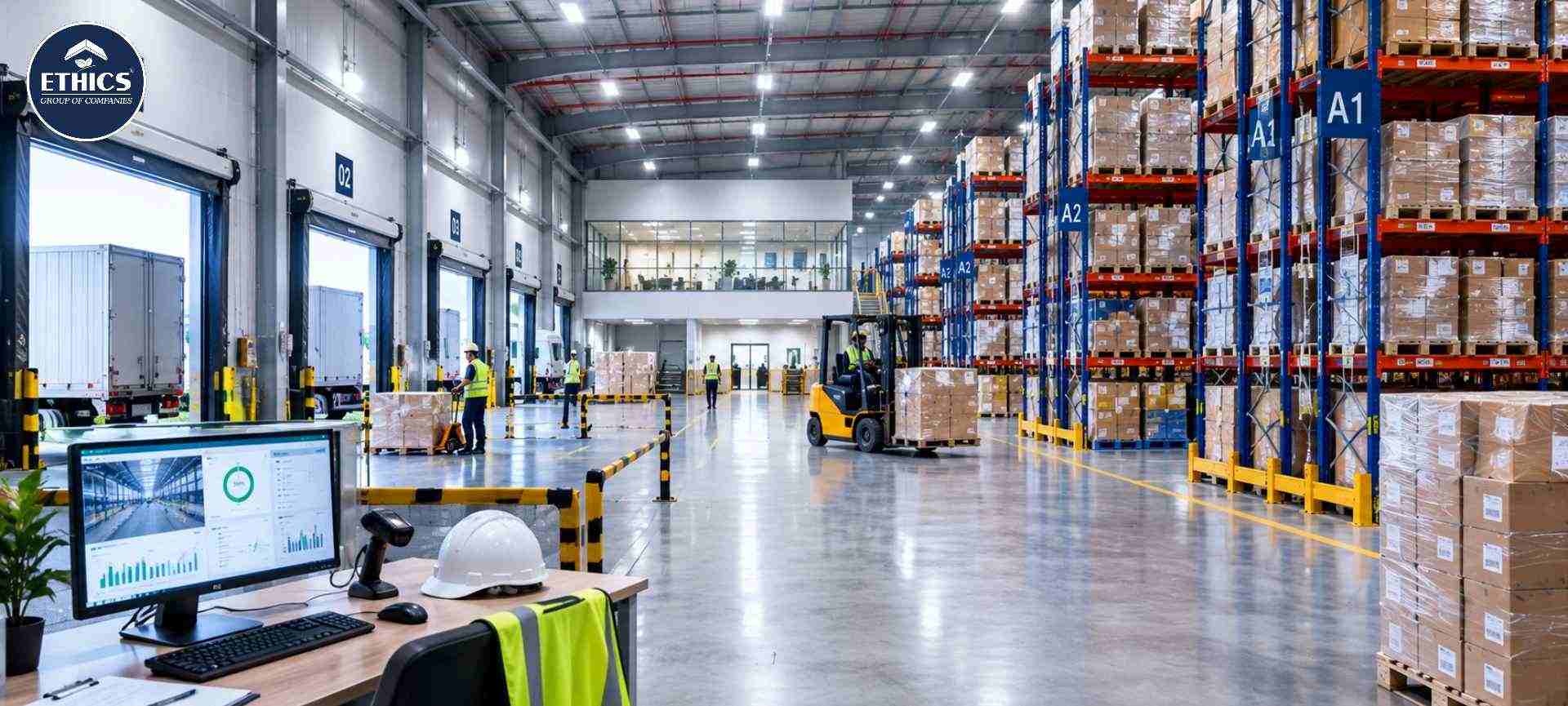
A Grade A+ warehouse is a modern, institutional-quality facility built to the upper end of industry specifications. Those specifications cover height, floor strength, fire protection, power, security and systems readiness.
One clarification matters here. India has no statutory or BIS grading for warehouses. “Grade A+” is a market convention used by developers, brokers and consultants. Treat it as a specification you verify, not a certificate you accept.
In practice, these buildings sit in planned industrial or logistics parks. They are designed for high-volume, high-accuracy operations and are usually leased by institutional occupiers.
Grade A+ vs Grade A, B and C Warehouses: What Is the Difference?
The table below shows indicative ranges based on commonly used market benchmarks. Specifications vary by developer and city, so always confirm against the actual building.
|
Parameter |
Grade A+ |
Grade A |
Grade B |
Grade C |
|
Clear height |
12 m or more |
About 9–12 m |
About 6–9 m |
Below 6 m |
|
Flooring |
High-load, flat, joint-minimised |
Good industrial floor |
Basic, uneven in places |
Often unrated |
|
Fire protection |
Detection, engineered sprinklers, hydrants, valid NOC |
Sprinklers and hydrants |
Limited or partial |
Minimal |
|
Docks |
High dock-to-area ratio, levellers |
Levellers, fewer docks |
Ground-level loading |
Ground-level loading |
|
Power and security |
Full backup, CCTV, access control |
Backup, CCTV |
Partial |
Basic |
|
Certification |
Often IGBC/LEED-aligned |
Sometimes |
Rare |
None |
|
Best suited for |
High-velocity, high-value, regulated goods |
General distribution |
Slow-moving stock |
Low-value storage |
The jump from A to A+ is rarely about one feature. It is the combination of height, floor, fire design, docks and power that lets an operator store more densely with fewer failures.
Grade B and C buildings are not “bad”. They suit slow-moving, low-value or seasonal stock well.
Key Features That Define a Grade A+ Warehouse
Structure, Layout and Location
A clear height of 12 metres or more allows high-bay racking and more pallet positions on the same footprint. Wide column spacing, adequate truck turning radius and a generous dock count reduce yard and dock congestion.
Location matters just as much. Sites near highway corridors, rail terminals and ports support multimodal freight transport. That gives planners a real choice between speed and cost per tonne-kilometre.
Fire Safety and Statutory Compliance
Fire safety in warehouses is where weaker buildings cut corners, and where losses are largest. Look for automatic detection, sprinkler design matched to your commodity, hydrant networks, multiple exits and a valid fire NOC aligned to the National Building Code of India. Insurers examine these details closely when pricing cover.
Technology and Automation Readiness
Not every site needs robots. But a Grade A+ building should be ready for warehouse automation. That means load-rated, flat floors for conveyors and shuttle systems, reliable power, structured network cabling, and space for scanning, WMS and yard management. A building that cannot support these will constrain you within two or three years.
Power, Security and Sustainability
Expect full power backup, perimeter security, CCTV and controlled access. Many developers also add solar capacity, rainwater harvesting and green certification. For multinational customers, ESG reporting is increasingly part of vendor selection.
Why Does a Grade A+ Warehouse Matter for Your Supply Chain?
Operational Impact
Better racking height and layout improve space utilisation. Better floors and docks cut product damage and truck turnaround time. Systems-ready buildings support tighter inventory accuracy, which flows directly into fill rates.
It also helps to separate supply chain vs logistics. Logistics moves and stores goods. The supply chain covers the wider flow from planning and sourcing to fulfilment. A warehouse is a logistics asset, yet its quality decides whether an end to end supply chain performs predictably or firefights every peak season.
Financial Impact
Rent per square foot is the number everyone compares. It is rarely the number that matters. Compare cost per pallet position, cost per order line and loss-and-damage rates instead.
A taller, better-designed building can hold materially more pallets on the same footprint. That can lower cost per pallet even when headline rent is higher. Stronger fire design and security can also reduce insurance friction and shrinkage.
Importers see another benefit. Bonded warehousing inside a compliant facility lets customs duty be deferred until goods are cleared for domestic use, which eases working capital.
There is also a structural trend. After GST removed the need for state-wise stock points, many brands consolidated into fewer, larger hubs. That shift is a major reason institutional-grade space gained ground. In 2026, the push behind the National Logistics Policy and PM Gati Shakti on infrastructure integration keeps raising occupier expectations.
Who Should Consider Grade A+ Warehousing?
-
FMCG and consumer goods: Shelf-life control, SKU proliferation and tight modern-trade and quick-commerce windows are among the supply chain challenges for FMCG brands. A high-velocity FMCG supply chain gains most from faster dock turnaround and accurate FEFO picking.
-
Pharma and healthcare: Pharma logistics in India demands temperature-controlled zones, validated temperature mapping, GDP-aligned practices and audit-ready records.
-
E-commerce and electronics: High order-line volumes and theft-sensitive goods justify the security and systems readiness.
-
Automotive and high-value industrial: Precision parts need clean, controlled, well-organised storage.
Not every business needs this grade. If your inventory is slow-moving, low-value or purely seasonal, a well-run Grade A or B facility may serve you better at lower cost.
How to Evaluate a Grade A+ Warehouse: A Practical Checklist
Whether you are working with an in-house team or one of the many supply chain management companies in India, verify claims on site rather than on paper.
-
Clear height: Measure it at the eaves, not the ridge.
-
Floor load and flatness: Ask for test reports, not brochure values.
-
Fire design: Check the NOC, sprinkler design basis and last inspection date.
-
Dock ratio and yard: Confirm dock count, levellers and truck-marshalling space.
-
Power backup: Confirm the capacity actually available to the tenant.
-
Systems readiness: Confirm network cabling, and WMS and ERP integration options.
-
Operating model: If you use 3PL warehousing, check the provider’s SLAs, audit rights and how peak capacity is handled.
-
Total cost view: Compare cost per pallet position and per order line, not rent alone.
-
Connectivity: Test real transit times to your key markets and nodes.
-
Exit flexibility: Review lock-in periods, escalation clauses and expansion options.
Conclusion
A Grade A+ warehouse is not a status symbol. It is a specification set that should earn its premium through lower damage, faster throughput, safer operations and cleaner compliance.
The right choice depends on your inventory profile, service promise and growth plan. Ethics Group helps businesses match warehouse specifications to those realities, so the grade you pay for is the grade you actually use.


.jpg)