

A carton declared at 2 kg arrives at the hub and weighs 4 kg. Its volume is double what the booking said. The freight invoice then charges for the real figures, and the margin on that shipment disappears.
Multiply this across thousands of parcels a day and you have one of the quieter causes of revenue leakage in logistics. It is also why dimensioning, weighing and scanning (DWS) has moved from a niche courier tool to standard equipment in modern fulfillment.
Good supply chain management depends on accurate data at the point where goods are handled. This guide explains how a DWS system works, the main types, where it pays back and how to choose one.
What Is a DWS (Dimensioning, Weighing and Scanning) System?
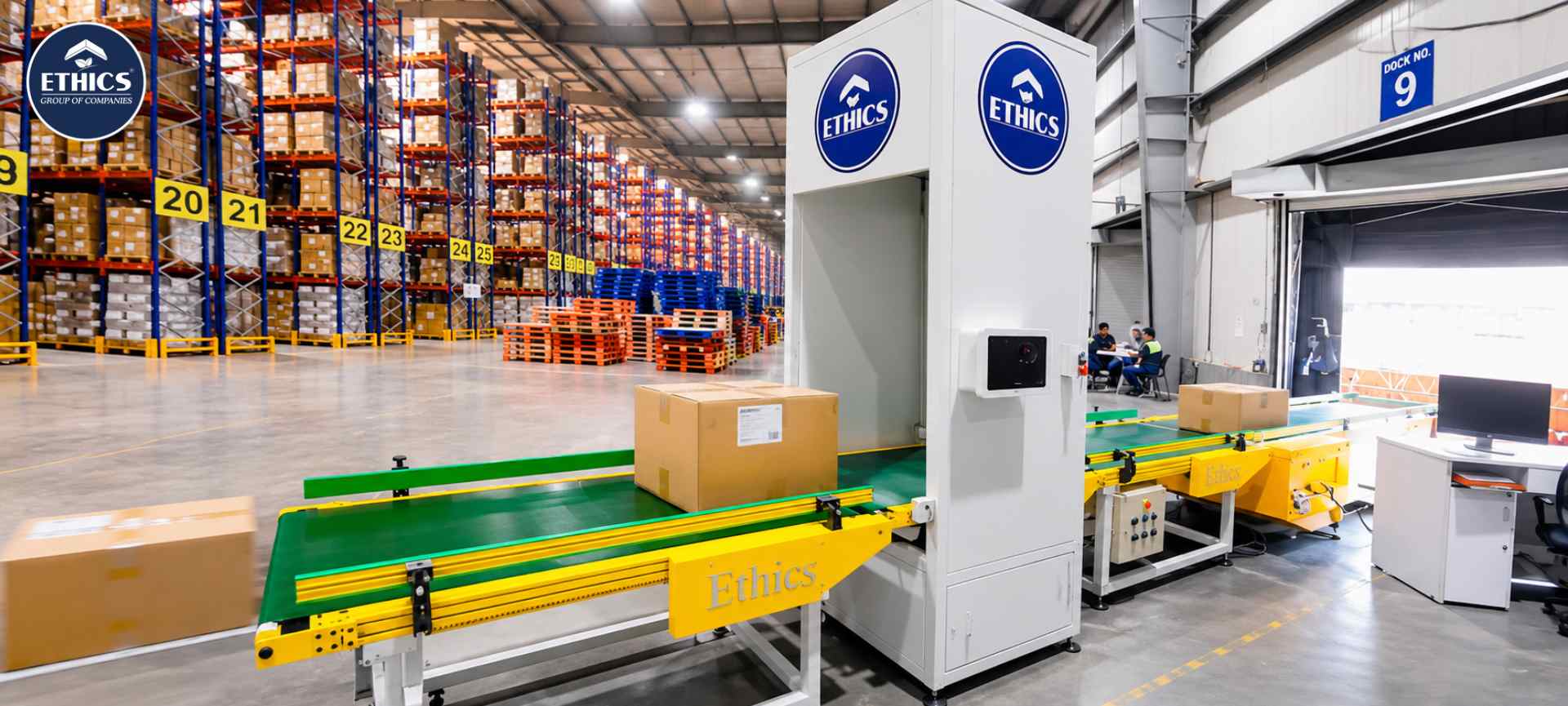
A DWS system is an automated station that measures a package’s length, width and height, records its weight and reads its barcode or label in one pass. It then sends all three data points to your warehouse or transport systems.
Each element solves a separate problem:
-
Dimensioning captures the package’s real volume.
-
Weighing captures its actual weight.
-
Scanning links both readings to the right order, shipment or SKU.
Together, they replace manual tape measures, floor scales and handheld scanners. Those methods are slow, inconsistent and often skipped when volumes peak.
There is a useful link to the supply chain vs logistics distinction here. A DWS system is a logistics tool, since it handles physical parcels. But the data it produces feeds planning, billing and network decisions that sit higher in the supply chain.
How Does a DWS System Work, Step by Step?
-
Package presentation. The parcel moves through the station on a conveyor, or is placed on a static platform by an operator.
-
Dimensioning. Sensors capture the package’s shape. Common technologies include laser light curtains, time-of-flight sensors and 3D cameras. Software calculates length, width, height and cubic volume.
-
Weighing. Load cells under the platform or belt record weight. In-motion systems capture it while the parcel moves, and static systems wait for the reading to settle.
-
Scanning. Camera-based or laser scanners read barcodes and labels from multiple sides, so orientation matters less. Some stations also capture an image for proof and dispute resolution.
-
Data processing. The system matches the readings to the order or shipment ID, calculates volumetric weight and compares the result with declared values and master data.
-
Integration and action. Data flows to your warehouse management system, transport system or billing platform. Exceptions are flagged, and parcels can be diverted to the right lane or packing station.
Volumetric (dimensional) weight is typically volume divided by a carrier-specific factor, with 5,000 and 6,000 cm³ per kg widely used. Carriers bill the greater of actual and volumetric weight, which is why accurate dimensions matter.
Types of DWS Systems
|
Type |
How it works |
Best for |
|
Inline (conveyor) DWS |
Measures parcels in motion on a belt |
High-volume parcel and e-commerce flows |
|
Static DWS |
Operator places items on a scale and measurement frame |
Moderate volumes, mixed or irregular shapes |
|
Pallet and freight DWS |
Measures pallets, often on forklifts or floor platforms |
Inbound freight, LTL, bulky goods |
|
Mobile or handheld |
Portable devices for ad hoc measurement |
Low volumes, spot checks, satellite sites |
Match the type to your parcel mix and throughput. A static unit can outperform a conveyor system in a site that handles irregular, low-volume items.
Key Benefits of a DWS System
Operational Benefits
-
Speed and consistency: Automated capture removes the variation between operators and shifts.
-
Cleaner master data: Real dimensions improve slotting, cartonisation and trailer or container loading plans.
-
Exception control: Mismatches between declared and measured data are caught at the dock, not at invoice time.
-
Audit trail: Images and timestamped readings help resolve claims and disputes quickly.
Financial Benefits
-
Recovery of revenue leakage: Under-declared weights and dimensions are billed correctly.
-
Fewer carrier chargebacks: You can dispute or pre-empt dimensional-weight charges with evidence.
-
Better cost-to-serve: Accurate volume and weight data shows what each customer, channel or SKU really costs to handle and ship.
-
Capacity utilisation: Better cube data improves space use in vehicles and warehouses.
When building a business case, baseline your current billing disputes, weight discrepancies and manual handling time first. A DWS system pays back where those leakages are already measurable.
Where Is a DWS System Used?
-
E-commerce and fulfilment: Cartonisation checks, shipping-cost accuracy and automated sortation.
-
Courier and express hubs: Billing on measured weight and volume, plus routing.
-
3PL operations: Cube-based storage billing and accurate client invoicing.
-
FMCG distribution: In an FMCG supply chain, pallet and case data supports trailer loading, slotting and returns handling.
-
Retail distribution centres: Verification of inbound cartons against advance shipping notices.
-
Air and freight forwarding: Chargeable weight verification for volumetric billing.
How to Choose and Implement the Right DWS System
Choosing
-
Profile your parcels. Document size and weight ranges, shapes, packaging materials and daily and peak volumes.
-
Set accuracy needs. Define how accurate dimensions and weights must be. If the weight is used for billing, confirm Legal Metrology requirements for weighing instruments with your supplier.
-
Check scanning reliability. Ask for read-rate performance on your real labels, including damaged, curved or low-contrast ones.
-
Review integration. Look for open interfaces to your WMS, transport and billing systems, and the ability to push images and exception data.
-
Consider site conditions. Floor space, conveyor layout, lighting, dust and vibration all affect performance.
-
Look at total cost. Include installation, calibration, service contracts and spares, not just purchase price.
-
Decide ownership. The in-house vs outsourced supply chain decision matters here. A 3PL partner may already operate DWS equipment, which can be cheaper than owning your own.
Implementing
-
Baseline first. Record current weight discrepancies, billing disputes and handling time.
-
Prepare master data. Clean item and carton data so measured values compare against something reliable.
-
Pilot on one line. Prove accuracy and throughput before rolling out.
-
Integrate and test. Validate data flows into your systems and test how exceptions are handled.
-
Calibrate and maintain. Schedule regular calibration and track read rates and measurement drift.
-
Train the team. Operators need to handle unreadable labels and out-of-range items.
Conclusion
A DWS system is a data-capture investment more than an equipment purchase. It turns each parcel’s size, weight and identity into reliable data that supports billing, planning and service.
The best results come from a clear baseline, a pilot and clean integration with your wider systems. Ethics Group works with businesses to match DWS and warehouse technology to their parcel profile, volumes and billing model.









.jpg)