International trade creates a unique challenge for businesses: goods often need to be stored in a country before customs duties and taxes are settled. For importers and exporters, the cost of holding inventory during this period can directly affect working capital, cash flow, and supply chain efficiency.
Bonded Warehousing provides a structured solution by allowing eligible imported goods to be stored under customs control while applicable duties and taxes remain deferred, subject to the relevant customs procedures and regulations.
For businesses handling international inventory, bonded facilities can be more than a storage location. When integrated with transportation, inventory planning, customs processes, order fulfilment, and distribution, they can become an important component of an End to End Supply Chain strategy.
What Is Bonded Warehousing?
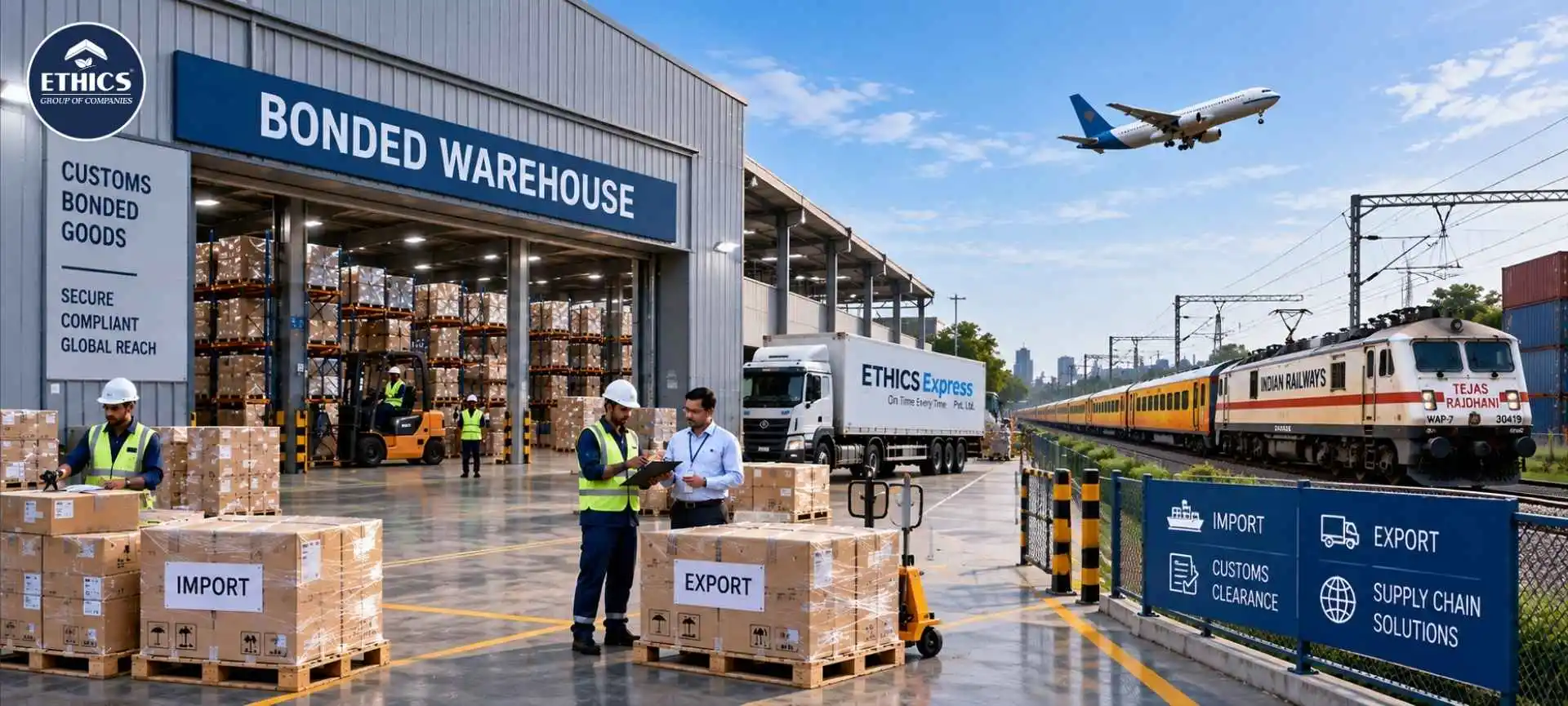
A bonded warehouse is a facility authorised under applicable customs regulations where imported goods can be stored without immediately paying the customs duty and certain applicable taxes, until the goods are cleared for domestic consumption or otherwise dealt with according to permitted procedures.
The exact rules, eligibility, documentation, storage periods, and permitted activities depend on the jurisdiction and type of bonded facility.
The fundamental business advantage is timing.
Instead of paying applicable import duties immediately upon arrival and then holding the inventory until it is needed, eligible businesses can defer the duty liability while the goods remain under customs control.
This can be particularly relevant for companies dealing with high-value imports, seasonal products, components, raw materials, or inventory that may require staged distribution.
Why Do Importers and Exporters Use Bonded Warehouses?
From an operational perspective, bonded storage can help businesses manage three important areas: cash flow, inventory positioning, and customs-controlled storage.
1. Better Working Capital Management
Import duties and taxes can represent a significant financial commitment when large shipments arrive.
Where permitted, duty deferment through bonded storage allows businesses to postpone that financial outflow until the goods are cleared according to applicable regulations.
This can improve working-capital planning, particularly for businesses importing large quantities or high-value products.
2. Strategic Inventory Holding
Not every imported product needs to enter the domestic market immediately.
A bonded facility can provide a controlled location for holding inventory until there is a confirmed commercial requirement, subject to the applicable customs framework.
This can be useful for businesses managing seasonal demand, project-based inventory, or products requiring phased distribution.
3. Improved Supply Chain Flexibility
International supply chains are rarely predictable enough to operate on a simple "import today, sell tomorrow" model.
Demand changes, customer orders may shift, and distribution plans can change.
Bonded storage can provide an additional layer of flexibility between international arrival and domestic clearance.
Bonded Warehousing vs. Regular Warehousing
The primary distinction is customs status.
In a conventional warehouse, imported goods generally enter the domestic customs territory after the applicable clearance process and associated duties and taxes have been addressed.
In a bonded warehouse, eligible goods remain under customs control until they are cleared or otherwise handled through an authorised procedure.
For importers, this difference affects more than accounting.
It can influence:
- Inventory planning
- Cash-flow timing
- Customs compliance
- Stock visibility
- Distribution strategy
- Documentation
- Order fulfilment processes
Businesses should therefore evaluate bonded warehousing as part of their wider supply chain design rather than treating it simply as a cheaper storage option.
Technology's Role in Bonded Warehousing
Customs-controlled inventory requires a high degree of accuracy. A mismatch between physical inventory and system records can create operational and compliance problems.
This is where technology becomes increasingly important.
Warehouse Management System
A modern Warehouse Management System can provide structured control over receiving, put-away, inventory locations, stock movements, picking, dispatch, and reporting.
For bonded operations, businesses should pay particular attention to inventory traceability, segregation, transaction records, documentation, and system controls that support applicable customs requirements.
Integration between warehouse systems, enterprise resource planning platforms, transportation systems, and customs-related processes can further improve visibility.
The objective is straightforward: the business should know what entered the facility, where it is stored, what movement occurred, and what status it currently holds.
AI & IoT in Warehousing
The combination of connected sensors and intelligent analytics is changing modern warehouse operations.
AI & IoT in Warehousing can support areas such as asset monitoring, environmental monitoring, inventory visibility, equipment utilisation, anomaly detection, and operational analytics.
IoT devices can capture information from equipment, storage areas, vehicles, and other operational assets. Analytics can then help warehouse teams identify unusual patterns or potential operational issues.
However, technology should solve a defined operational problem.
Installing sensors or AI tools without clear processes, reliable data, system integration, and measurable KPIs rarely produces sustainable value.
For bonded facilities, technology should complement—not replace—strong inventory controls and compliance processes.
DWS Technology for Better Inventory Accuracy
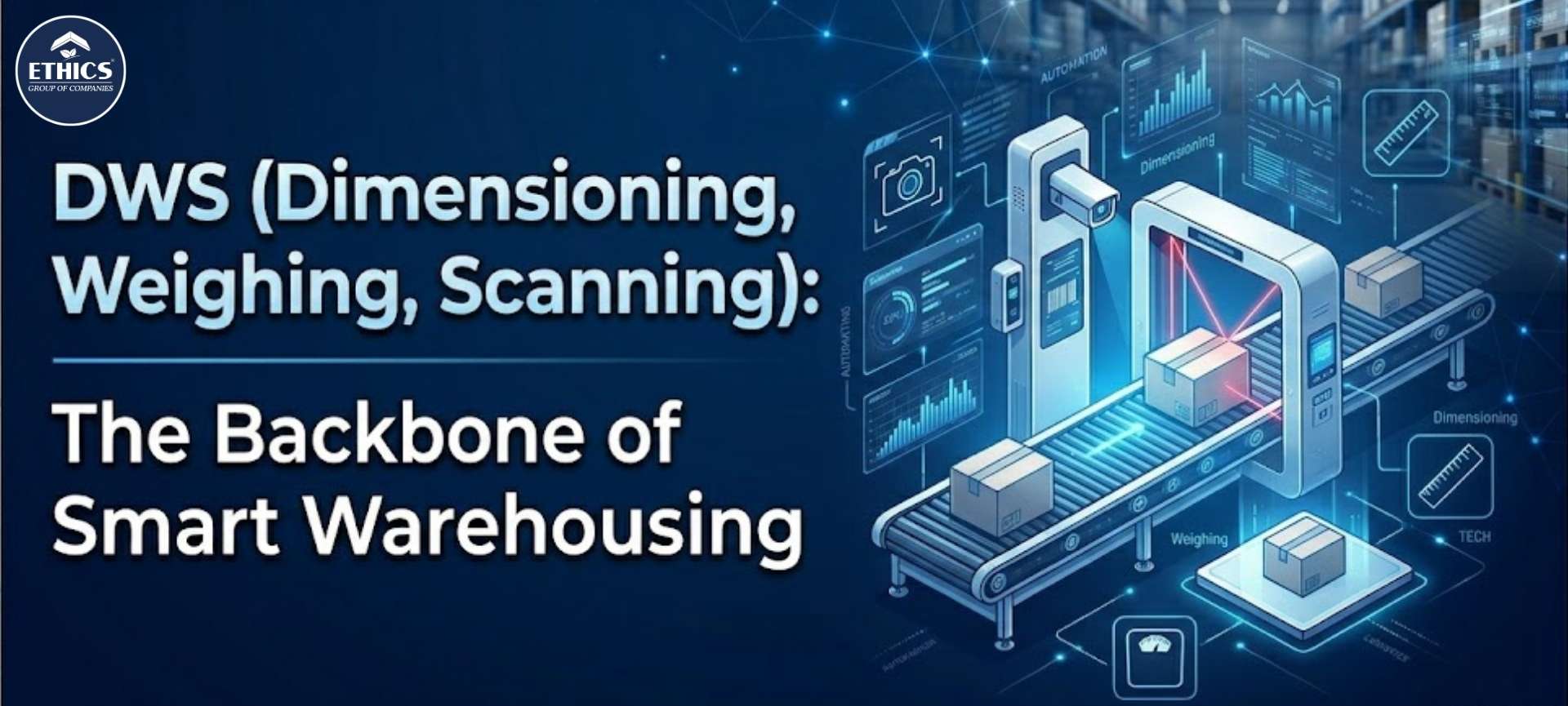
One important warehouse technology is DWS (Dimensioning, Weighing, Scanning).
DWS systems can capture shipment dimensions, weight, and barcode or package identification information in a single operational flow.
For businesses handling large shipment volumes, this can improve:
- Data accuracy
- Receiving efficiency
- Shipment identification
- Storage planning
- Billing accuracy
- Dispatch verification
When integrated with a Warehouse Management System, DWS data can become part of a broader digital record of the shipment.
This is particularly useful where operational teams need accurate information before inventory is moved, stored, picked, or dispatched.
Bonded Warehousing and End-to-End Supply Chain Planning
The greatest value comes when bonded storage is connected to the wider supply chain.
Consider an importer bringing components into India for a manufacturing operation.
Instead of moving every shipment directly into domestic inventory, the business can evaluate demand, production schedules, customer commitments, and clearance requirements before deciding when inventory should be released, subject to applicable regulations.
The broader flow may involve:
International Supplier → Port/Airport → Bonded Warehouse → Customs Clearance → Distribution Centre → Customer/Manufacturing Facility
This creates a more coordinated end-to-end supply chain rather than treating customs clearance and warehousing as separate activities.
Bonded Warehousing for Different Industries
Electronics and Technology
High-value electronic components may require controlled inventory management and careful tracking. Bonded storage can support businesses managing imported components before domestic clearance, where permitted.
Automotive
Automotive manufacturers and suppliers often manage imported components and parts across complex production schedules. Strategic inventory positioning can help align imports with manufacturing requirements.
Pharmaceuticals
Pharmaceutical supply chains require strong controls around product handling, traceability, documentation, and applicable regulatory requirements. Bonded arrangements may be relevant for certain imported products, depending on the applicable framework.
Retail and Consumer Goods
Importers handling seasonal or promotional products can benefit from greater flexibility in inventory timing, subject to customs rules and commercial requirements.
Urban Warehousing & Micro-Fulfillment: Where Does Bonded Storage Fit?
The growth of Urban Warehousing & Micro-Fulfillment is creating more distributed inventory networks.
However, bonded warehousing and micro-fulfilment serve different purposes.
Bonded facilities primarily address customs-controlled storage and duty timing for eligible goods, while micro-fulfilment focuses on positioning inventory closer to customers for faster order fulfilment.
In a complex supply chain, the two models can potentially form different stages of the network.
For example:
International Arrival → Bonded Storage → Customs Clearance → Regional Distribution → Urban Fulfilment → Customer
This allows businesses to separate international inventory management from domestic rapid fulfilment operations.
Key Benefits of Bonded Warehousing
When properly planned and operated, bonded warehousing can provide several strategic benefits:
- Duty deferment: Applicable duties and taxes can be deferred until permitted clearance.
- Working-capital efficiency: Businesses can better manage the timing of cash outflows.
- Inventory flexibility: Imported goods can be held until commercial requirements are clearer.
- Customs-controlled storage: Goods remain under the applicable customs framework.
- Better supply chain planning: International inventory can be integrated with downstream operations.
- Technology-enabled visibility: WMS, scanning, DWS, and connected systems can improve inventory control.
- Scalability: Businesses can design storage and distribution capacity around changing import volumes.
These benefits depend on compliance with applicable laws, authorisations, documentation, and operating procedures.
What Businesses Should Evaluate Before Choosing a Bonded Warehouse
Selecting a bonded facility should not be based only on location or storage rates.
Decision-makers should evaluate:
- Customs authorisation and compliance capability
- Inventory tracking and system controls
- Warehouse security and access controls
- Integration with ERP/WMS platforms
- Documentation and reporting processes
- Handling capabilities for the specific product category
- Connectivity to ports, airports, highways, and distribution networks
- Scalability during peak import periods
- Service-level agreements and operational governance
- Experience in managing customs-controlled inventory
A warehouse that offers low storage cost but weak visibility or poor process discipline can create greater risks elsewhere in the supply chain.
Future of Bonded Warehousing in India
Bonded warehousing is likely to become increasingly technology-driven as businesses demand greater visibility, faster processing, and better working-capital control.
Future operations will increasingly combine digital inventory systems, automated identification, connected warehouse equipment, analytics, and integrated logistics platforms.
The focus will also shift from simply storing imported goods to managing the complete flow of international inventory, from arrival and customs processes through domestic distribution.
Businesses that connect bonded operations with procurement, demand planning, warehousing, transportation, and fulfilment will be better positioned to build resilient and responsive supply networks.
Conclusion
Bonded Warehousing can play a strategic role in helping importers and exporters manage customs-controlled inventory, working capital, and supply chain flexibility. Its value becomes significantly greater when it is integrated with technology, inventory planning, transportation, and fulfilment operations.
For Ethics Group, the broader opportunity is to support businesses in developing connected logistics ecosystems where warehousing is not viewed as an isolated activity but as an integral part of supply chain performance.
For importers and exporters, the right approach is to evaluate bonded storage based on compliance, operational control, technology, connectivity, scalability, and total supply chain value—not simply the cost per square foot.

.jpg)