The terms supply chain and logistics are often used interchangeably, but they do not mean the same thing. Logistics is an important part of the broader supply chain, while supply chain management covers a much wider network of activities, decisions, partners, technology, and processes.
Understanding Supply Chain vs Logistics is particularly important for businesses managing manufacturing, warehousing, transportation, procurement, fulfilment, distribution, and customer service. A company may have efficient transportation and warehouse operations but still experience supply chain problems because procurement, inventory planning, supplier coordination, or demand forecasting are not aligned.
For B2B organisations, the distinction is more than a terminology issue. It influences how companies design operations, select technology, manage costs, evaluate logistics partners, and build resilience.
What Is Logistics?
A common starting point is the question: What is logistics?
Logistics is the planning and management of the movement and storage of goods from one point to another. It focuses primarily on ensuring that the right product reaches the right location at the right time and in the right condition.
Typical logistics activities include:
-
Transportation planning
-
Warehousing
-
Inventory movement
-
Order fulfilment
-
Packaging and handling
-
Loading and unloading
-
Distribution
-
Shipment tracking
-
Reverse logistics
For example, when a manufacturer moves finished goods from its plant to a regional warehouse and then to a distributor, transportation, storage, order processing, and delivery are logistics activities.
Logistics therefore focuses heavily on execution and physical flow.
What Is Supply Chain Management?
Supply chain management takes a broader view.
It coordinates the complete flow of materials, information, products, and associated business activities from suppliers through manufacturing and distribution to the final customer.
A typical supply chain management process can include:
Demand Planning → Procurement → Supplier Management → Manufacturing → Inventory Planning → Warehousing → Transportation → Distribution → Customer → Returns
This means supply chain management involves both physical operations and strategic decision-making.
For example, if demand for a product increases, supply chain teams may need to evaluate supplier capacity, raw material availability, production schedules, warehouse capacity, transportation requirements, and inventory positioning.
Logistics is involved in moving the goods. Supply chain management determines how the broader system should work together.
Supply Chain vs Logistics: Key Difference
The simplest way to understand the difference is:
Logistics = movement and storage of goods.
Supply Chain Management = coordination of the broader network that plans, sources, produces, stores, moves, and delivers goods.
| Area | Logistics | Supply Chain Management |
|---|---|---|
| Primary focus | Movement and storage | End-to-end network management |
| Scope | More operational | Strategic + operational |
| Transportation | Core function | One component |
| Warehousing | Core function | One component |
| Procurement | Usually outside core scope | Major function |
| Supplier management | Limited involvement | Significant involvement |
| Demand planning | Limited | Major responsibility |
| Inventory strategy | Operational control | Strategic optimisation |
| Technology | WMS, TMS, tracking | ERP, planning, analytics, WMS, TMS and more |
| Objective | Efficient product movement | Overall supply chain performance |
What Is the Purpose of Supply Chain Management?
The purpose of supply chain management is to coordinate the complete supply network so that businesses can meet customer requirements while managing cost, inventory, service levels, risk, and operational efficiency.
A strong supply chain aims to balance competing priorities.
For example, holding more inventory can improve product availability but increase carrying costs. Reducing inventory may release working capital but increase stockout risk.
Supply chain management brings these decisions together rather than optimising one function in isolation.
Why the End-to-End Supply Chain Matters
Modern businesses increasingly operate through an End-to-End Supply Chain model.
Instead of viewing procurement, manufacturing, warehousing, transportation, and distribution as independent departments, companies connect them through common processes and data.
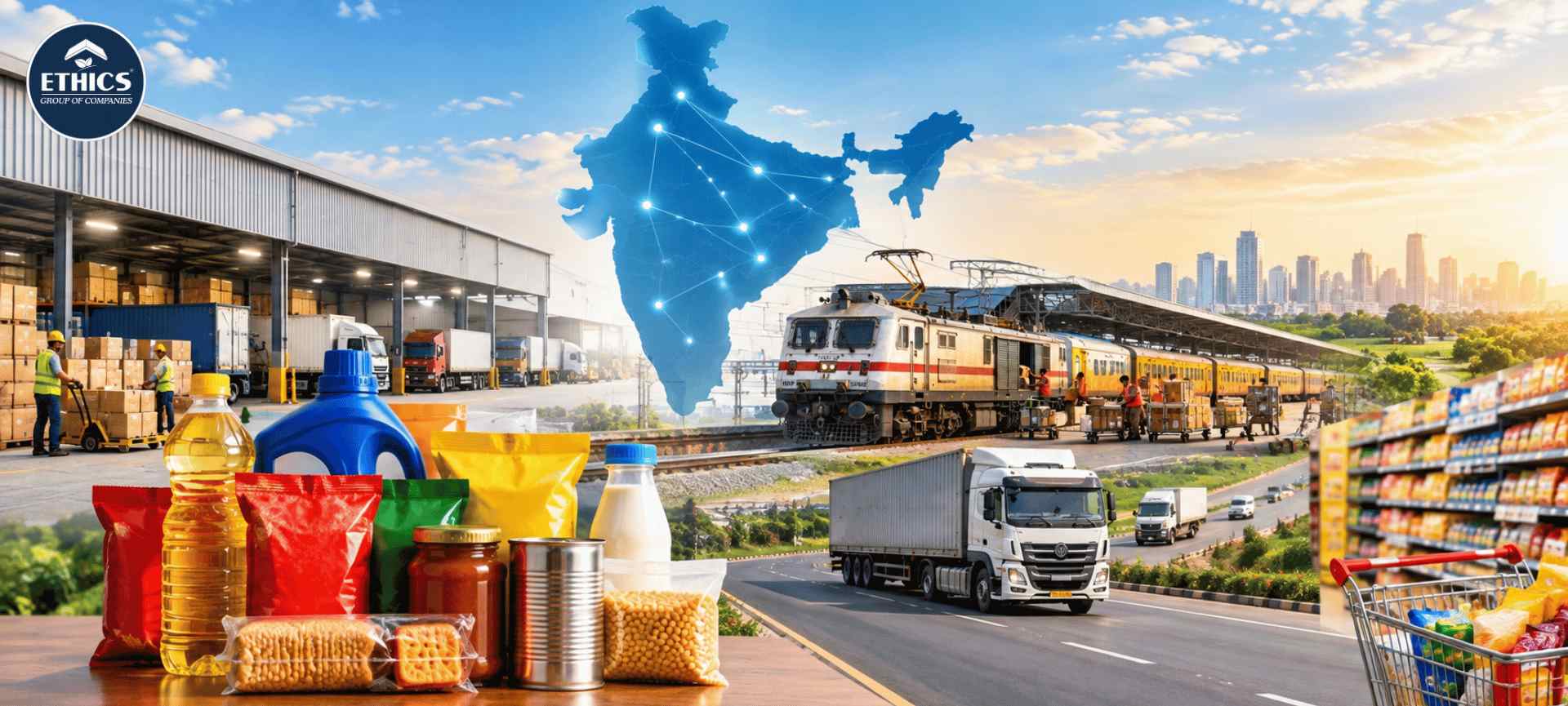
Consider an FMCG manufacturer launching a new product.
A logistics-only approach might focus on moving finished goods to distributors.
An end-to-end approach considers:
-
Expected market demand
-
Raw material availability
-
Production capacity
-
Inventory requirements
-
Warehouse locations
-
Transportation planning
-
Distributor demand
-
Customer service levels
-
Returns and reverse logistics
This broader perspective can help companies identify problems earlier and make decisions based on the overall business impact.
Role of Warehousing in Supply Chain Management
Warehousing sits at the intersection of logistics and supply chain management.
A warehouse does more than store products. It can influence inventory availability, order fulfilment speed, transportation planning, customer service, and working capital.
A Warehouse Management System (WMS) can help businesses manage receiving, put-away, inventory locations, picking, packing, dispatch, and stock visibility.
In industries with stringent handling requirements, warehouse systems can also support batch tracking, expiry management, and controlled inventory processes.
For example, GDP compliant warehousing requires businesses handling applicable pharmaceutical products to maintain appropriate processes for storage, handling, documentation, monitoring, and product integrity.
This demonstrates how logistics execution and broader supply chain controls work together.
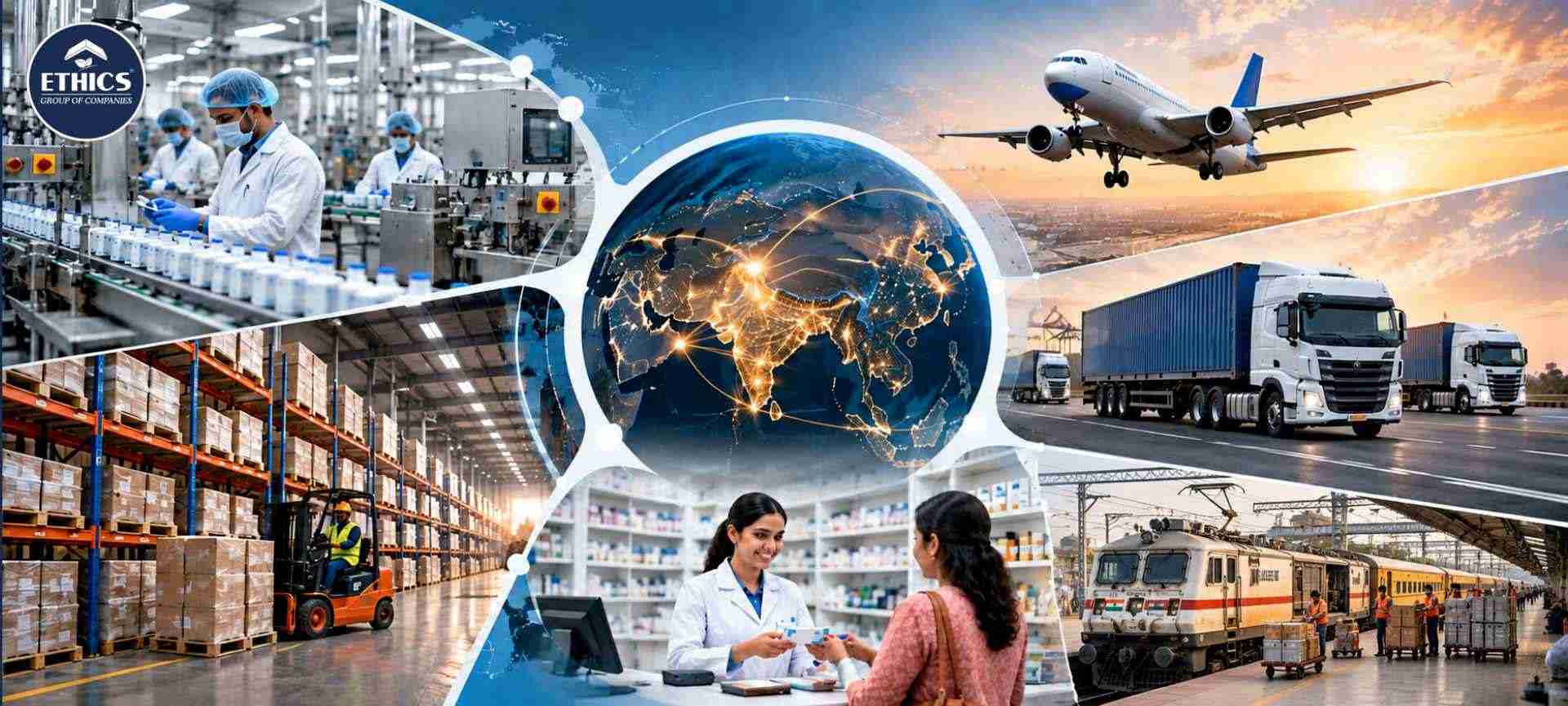
Pharmaceutical Example: Where the Difference Becomes Critical
The distinction becomes particularly clear in pharmaceutical distribution.
A logistics team may be responsible for transporting medicines from a warehouse to a distributor under defined handling conditions.
The wider supply chain team, however, may be responsible for understanding demand, managing supplier relationships, planning inventory, coordinating manufacturing requirements, determining warehouse locations, selecting logistics partners, and ensuring product availability.
If transportation is efficient but inventory planning is poor, customers can still experience shortages.
Similarly, if inventory is available but the transportation network is unreliable, service levels can suffer.
This is why pharmaceutical businesses need to look beyond individual logistics activities and manage the complete supply chain.
Supply Chain Management Issues and Challenges
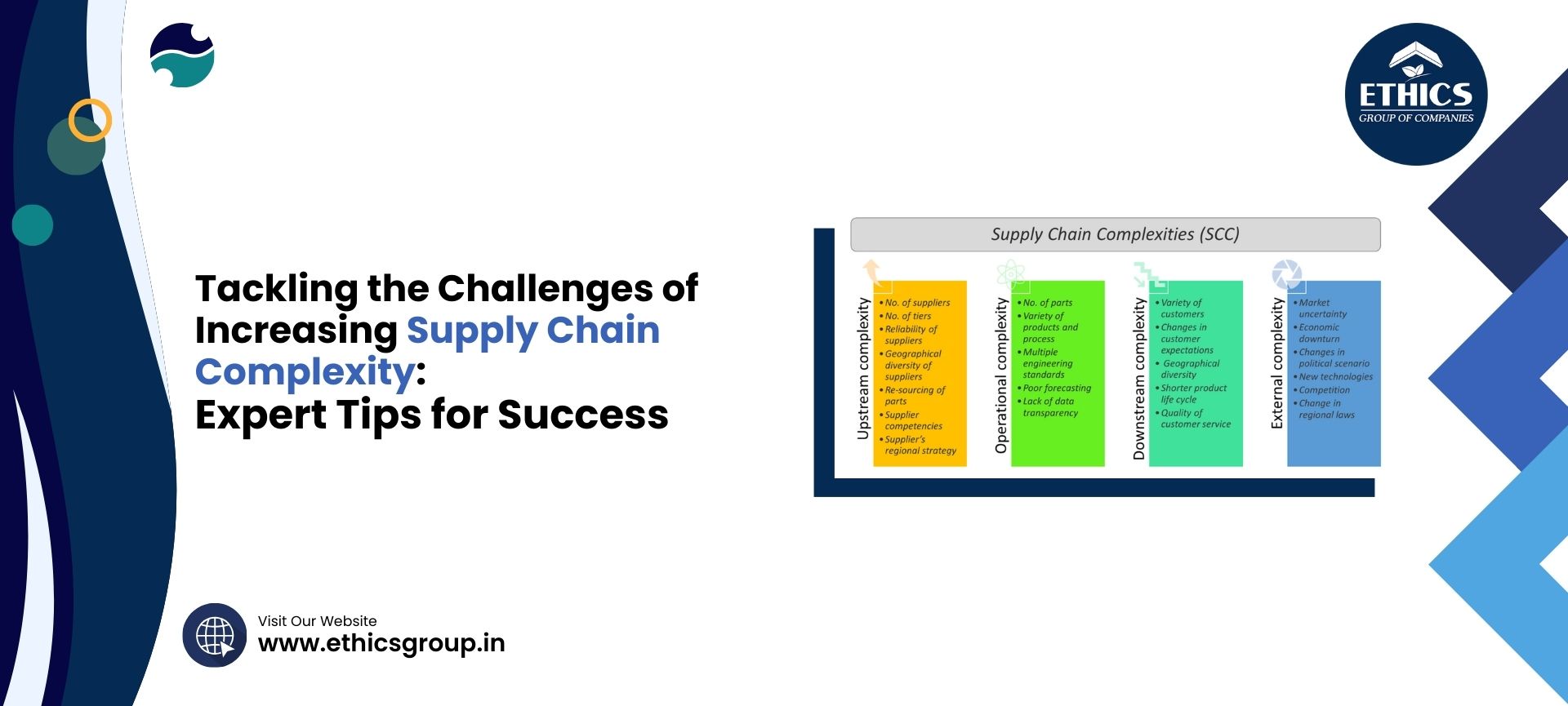
Businesses face several supply chain management issues and challenges that cannot be solved through transportation optimisation alone.
Common challenges include:
Demand Uncertainty
Forecasting customer demand accurately is difficult, particularly in markets affected by seasonality, promotions, economic changes, or rapidly changing consumer behaviour.
Inventory Imbalance
Excess inventory increases carrying costs, while insufficient inventory can result in stockouts and lost sales.
Supplier Risk
Dependence on a limited number of suppliers can expose businesses to disruptions caused by capacity constraints, quality issues, or unexpected events.
Limited Visibility
When information is spread across different systems and partners, decision-makers may struggle to obtain a reliable real-time view of inventory and shipments.
Transportation Constraints
Fuel costs, capacity availability, route restrictions, delivery windows, and changing customer requirements can affect logistics performance.
Technology Integration
Disconnected ERP, WMS, TMS, procurement, and order-management platforms can create information gaps and manual work.
Choosing Rail, Road, or Air
Transportation is one of the most visible differences between supply chain strategy and logistics execution.
When deciding between Rail, Road, or Air, businesses should consider:
-
Shipment urgency
-
Product characteristics
-
Distance
-
Service reliability
-
Cost
-
Shipment volume
-
Destination
-
Handling requirements
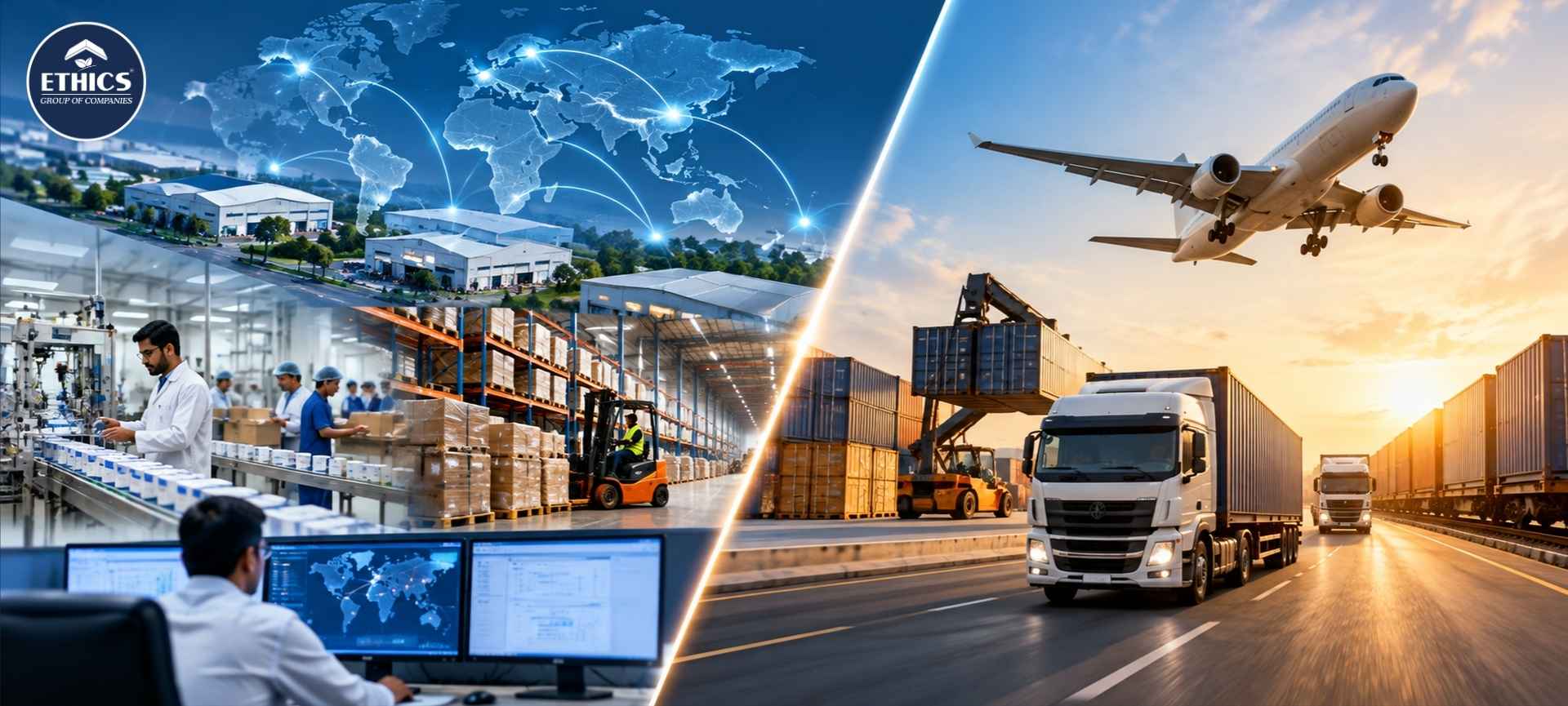
Road transportation provides flexibility and broad geographical reach. Rail can be suitable for appropriate lanes and shipment profiles where scheduled movement and economics support its use. Air transportation is generally considered where speed and time sensitivity justify the higher transportation cost.
The strategic supply chain decision is not simply which mode is cheapest. It is which combination of modes delivers the required service and business outcome.
3PL vs 4PL: Where Do They Fit?
The 3PL vs 4PL discussion also highlights the difference between logistics and supply chain management.
A 3PL typically provides operational services such as transportation, warehousing, fulfilment, and distribution.
A 4PL generally operates at a broader orchestration level, coordinating multiple logistics providers, technology platforms, processes, and supply chain resources.
Businesses choosing between the models should consider their internal capabilities, network complexity, technology maturity, desired control, scalability, and strategic objectives.
Importance of Supply Chain Management System
The importance of supply chain management system becomes clear when businesses operate across multiple suppliers, facilities, transportation partners, and customer channels.
An integrated system can connect information from procurement, inventory, warehouse operations, transportation, orders, and distribution.
This can help decision-makers identify exceptions faster and understand how one operational decision affects another.
For example, a procurement delay can affect manufacturing, which can affect inventory availability, which can then affect warehouse fulfilment and customer delivery.
A connected system makes these relationships easier to monitor.
Benefits of Supply Chain Management Systems
The benefits of supply chain management systems can include:
-
Better inventory visibility
-
Improved demand planning
-
Faster decision-making
-
Greater supplier visibility
-
Improved warehouse coordination
-
Better transportation planning
-
Reduced manual processes
-
Improved order fulfilment
-
Stronger risk monitoring
-
More consistent customer service
However, technology should not be viewed as a substitute for process discipline. Data quality, integration, governance, employee training, and clearly defined responsibilities remain essential.
How Businesses Can Improve Their Supply Chain
Companies looking to improve supply chain performance should begin with the fundamentals.
1. Map the complete supply chain: Understand suppliers, facilities, inventory flows, transportation routes, customers, and information flows.
2. Identify bottlenecks: Measure where delays, excess inventory, quality issues, or unnecessary costs are occurring.
3. Improve visibility: Connect relevant ERP, WMS, TMS, procurement, and order-management data.
4. Segment operations: Not every product, customer, or transportation lane requires the same service model.
5. Build resilience: Develop alternative suppliers, transportation options, inventory strategies, and contingency plans where appropriate.
6. Measure business outcomes: Track service levels, inventory turns, order-cycle time, cost-to-serve, transportation utilisation, and fulfilment accuracy.
Future of Supply Chain and Logistics
The boundary between supply chain strategy and logistics execution will continue to become more connected.
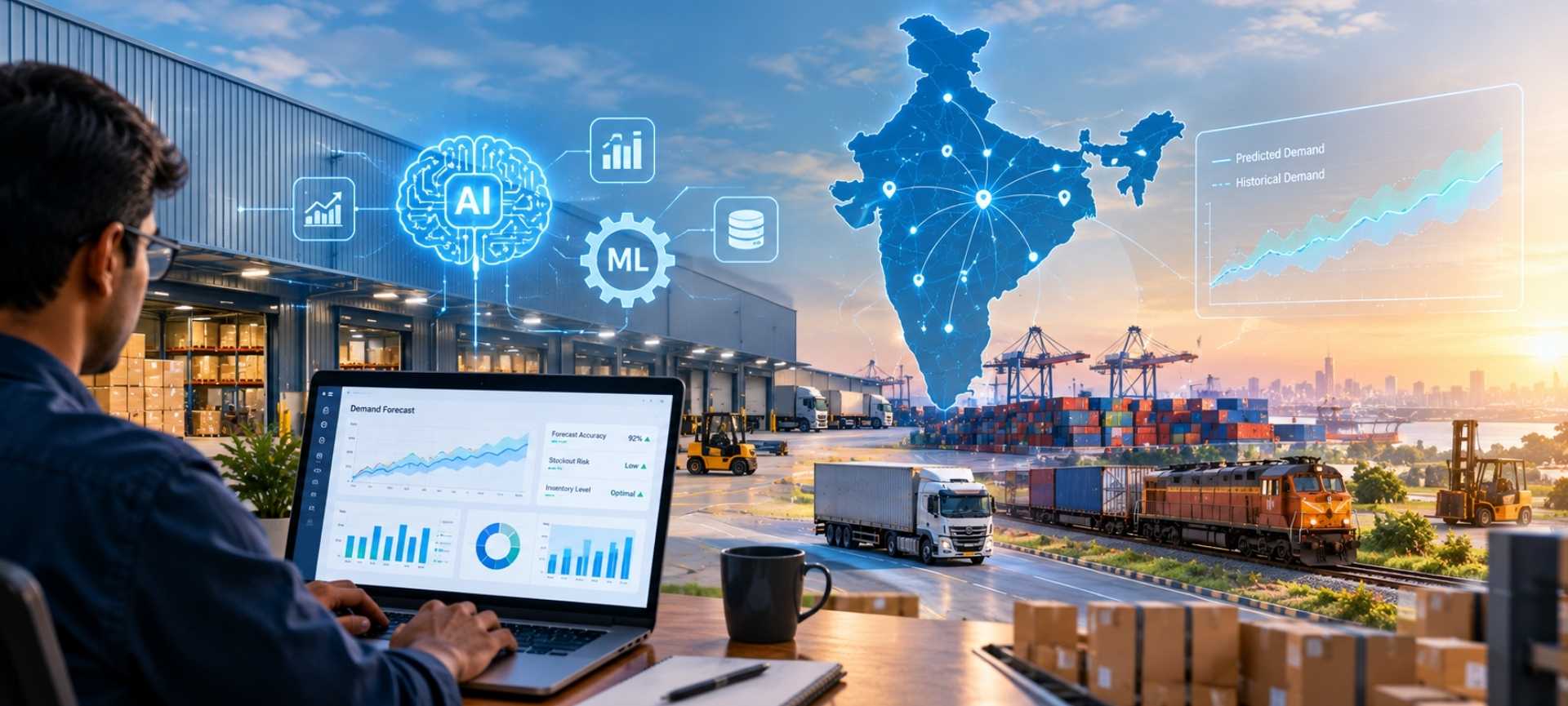
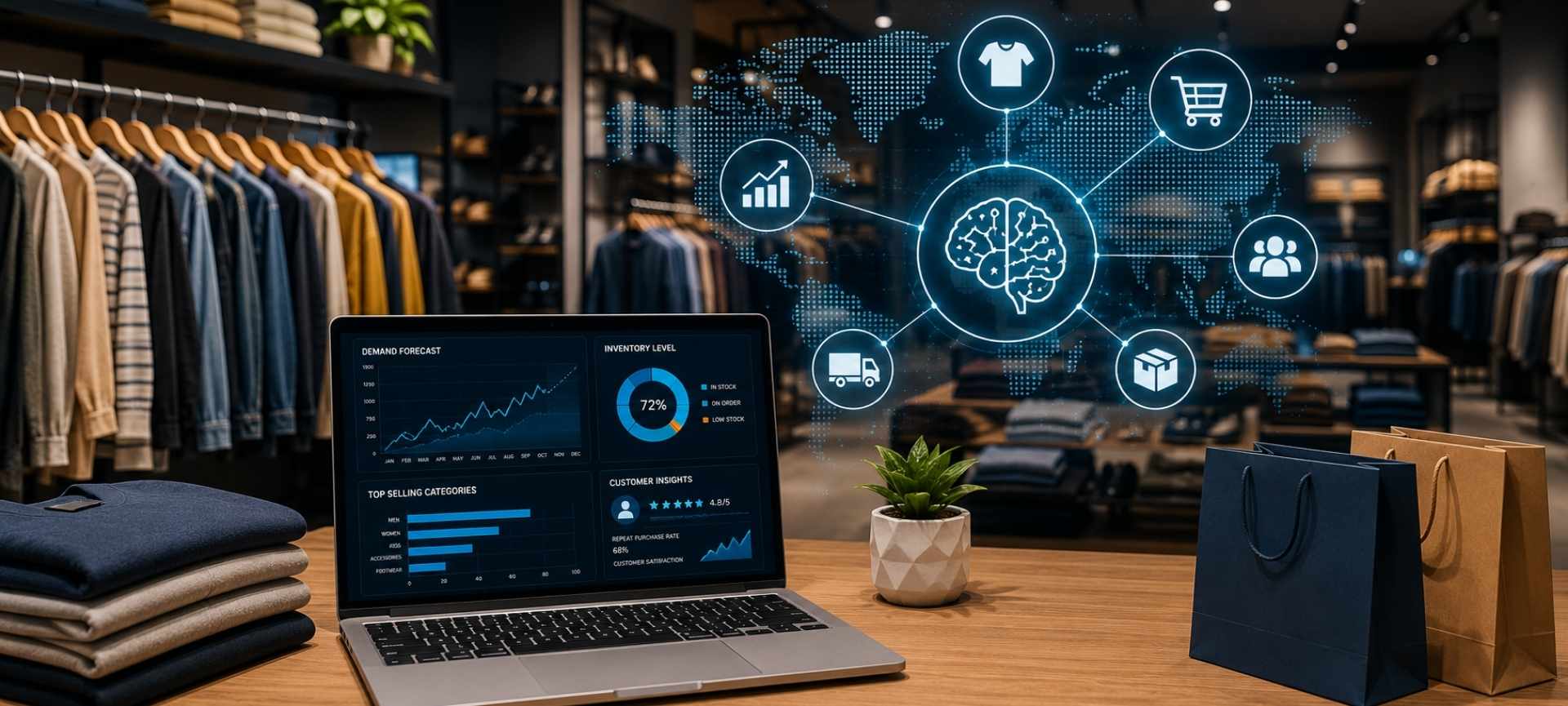
Artificial intelligence, predictive analytics, warehouse automation, IoT-based visibility, digital freight platforms, and advanced planning tools are enabling companies to make faster and more informed decisions.
The future is not about replacing logistics with technology. It is about connecting operational execution with better planning and decision-making.
Companies that can combine reliable logistics execution with integrated supply chain planning will be better positioned to respond to demand changes, disruptions, cost pressures, and customer expectations.
Conclusion
Understanding Supply Chain vs Logistics helps businesses make better decisions about operations, technology, partnerships, and investment. Logistics ensures that goods are stored and moved efficiently, while supply chain management connects procurement, planning, production, inventory, logistics, distribution, and customer requirements into a coordinated system.
For Ethics Group, this distinction reinforces the importance of building logistics capabilities that support wider supply chain objectives rather than operating as isolated services.
Ultimately, successful businesses do not optimise transportation, warehousing, procurement, or inventory independently. They look at how these functions interact and create an integrated, measurable, and resilient supply chain.
.jpg)