Retail supply chains have evolved far beyond moving products from warehouses to store shelves. Today's retailers operate in an environment where customer expectations change rapidly, product demand fluctuates daily, and omnichannel shopping has become the norm. Consumers expect products to be available wherever they shop—whether online, in-store, or through quick commerce channels—and they expect deliveries to be accurate and fast.
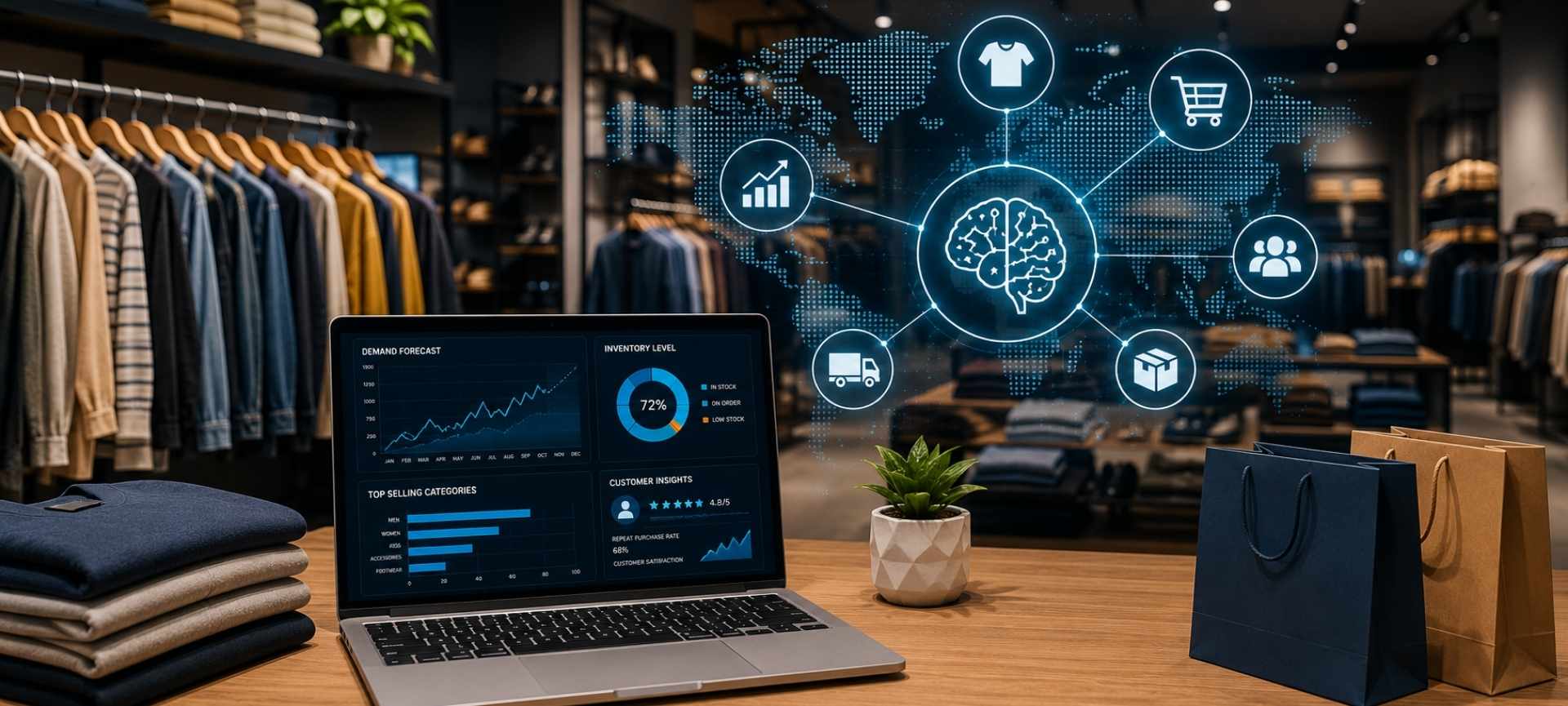
Meeting these expectations requires more than traditional planning methods. Artificial Intelligence (AI) has emerged as a strategic capability that enables retailers to forecast demand with greater precision, optimize inventory placement, reduce operational waste, and improve customer satisfaction.
Rather than replacing supply chain professionals, AI empowers planners, warehouse managers, procurement teams, and logistics leaders with actionable insights derived from real-time data. When implemented correctly, AI creates a supply chain that is predictive instead of reactive, helping businesses make informed decisions before disruptions affect customers.
This article explores how AI is reshaping retail supply chain management, the challenges it addresses, practical business applications, and the measurable value it delivers across forecasting, inventory management, and customer experience.
Why Traditional Retail Supply Chains Struggle
Retail organizations manage thousands of SKUs across multiple distribution points while balancing seasonal demand, promotions, supplier lead times, and transportation constraints.
Several operational challenges continue to impact profitability:
- Inaccurate demand forecasting
- Overstocking and excess inventory
- Frequent stock-outs
- Manual inventory planning
- Rising logistics costs
- Limited visibility across supply chain operations
- Demand volatility caused by promotions and seasonal events
These challenges directly affect revenue, customer loyalty, and operational efficiency.
Without intelligent planning, businesses often carry excess inventory while simultaneously losing sales because critical products are unavailable where customers need them.
How AI is Transforming Retail Supply Chain Management
Artificial Intelligence combines machine learning, predictive analytics, automation, and real-time operational intelligence to optimize supply chain decisions.
Instead of relying solely on historical sales reports, AI continuously evaluates multiple variables such as:
- Historical purchasing trends
- Weather patterns
- Promotional campaigns
- Regional demand
- Customer buying behavior
- Supplier performance
- Transportation lead times
- Market trends
The result is significantly more accurate forecasting and better operational planning.
Smarter Demand Forecasting
Demand forecasting has traditionally relied on historical sales data and planner experience. While valuable, these methods often fail during rapidly changing market conditions.
AI-driven forecasting continuously learns from new information and adjusts predictions automatically.
Benefits include:
- Improved inventory accuracy
- Reduced excess stock
- Better seasonal planning
- Faster response to changing customer demand
- Lower working capital requirements
Retailers can allocate inventory based on expected regional demand instead of broad assumptions, resulting in better product availability and reduced inventory holding costs.
Intelligent Inventory Stocking
Having inventory is no longer enough—it must be available at the right location and at the right time.
AI helps retailers determine:
- Which products require replenishment
- Optimal inventory levels
- Store-specific stocking quantities
- Warehouse allocation strategies
- Safety stock requirements
This supports Digitized store replenishment, enabling automated inventory decisions based on real-time consumption rather than manual estimation.
Automated replenishment minimizes stock-outs while preventing unnecessary overstock situations.
Warehouse Optimization Through AI
Modern warehouses generate enormous amounts of operational data every day.
AI analyzes this information to improve:
- Picking routes
- Storage utilization
- Workforce productivity
- Dock scheduling
- Inventory movement
- Order prioritization
When combined with AI & IoT in warehousing, connected sensors provide continuous visibility into inventory movement, equipment performance, storage conditions, and operational bottlenecks.
Warehouse managers gain real-time insights that help improve throughput while reducing operational delays.
Enhancing Omnichannel Retail Operations
Consumers expect seamless shopping experiences regardless of channel.
Retailers must synchronize:
- Physical stores
- Online marketplaces
- Mobile commerce
- Click-and-collect services
- Quick commerce platforms
Supporting Modern warehousing / omnichannel retail requires intelligent inventory visibility across every fulfillment location.
AI enables retailers to identify the best fulfillment source based on inventory availability, transportation cost, customer location, and delivery timelines.
This creates a consistent customer experience across every purchasing channel.
End-to-End Supply Chain Planning
Retail supply chains involve procurement, manufacturing, warehousing, transportation, distribution, and customer delivery.
Disconnected planning often creates inefficiencies between these stages.
AI improves End-to-end supply chain planning by connecting operational data from suppliers through final delivery.
Business leaders gain visibility into:
- Supplier reliability
- Inventory health
- Transportation performance
- Distribution efficiency
- Customer demand shifts
Instead of reacting after problems occur, organizations can proactively adjust purchasing, inventory allocation, and logistics planning.
Supporting Faster Retail Fulfillment
Urban consumers increasingly expect same-day or next-day deliveries.
To meet these expectations, retailers are expanding localized fulfillment capabilities through Micro-fulfillment / dark stores.
AI determines:
- Which locations should stock specific products
- Optimal inventory allocation
- Fastest fulfillment route
- Delivery prioritization
Localized fulfillment reduces delivery times while lowering transportation costs and improving customer satisfaction.
Improving Logistics Collaboration
Retail operations depend heavily on transportation partners.
AI enables better collaboration between retailers and 3PL and outsourcing logistics providers by improving shipment visibility, demand forecasting, transportation planning, and warehouse coordination.
Shared operational intelligence allows logistics providers to allocate vehicles more efficiently, improve route planning, and reduce empty miles.
The result is improved service levels across the entire supply chain ecosystem.
Operational Benefits for Retail Businesses
Organizations implementing AI across retail supply chains typically experience improvements in multiple operational areas.
Better Forecast Accuracy
Predictive analytics reduces demand uncertainty and improves purchasing decisions.
Lower Inventory Costs
Optimized stock levels reduce excess inventory while maintaining product availability.
Faster Order Fulfillment
Automated planning improves warehouse productivity and order processing efficiency.
Improved Customer Satisfaction
Accurate inventory availability leads to fewer canceled orders and faster deliveries.
Better Resource Utilization
AI helps allocate labor, warehouse space, and transportation resources more effectively.
Increased Supply Chain Visibility
Real-time insights improve decision-making across procurement, warehousing, logistics, and retail operations.
Practical Business Use Cases
National Retail Chains
Large retailers use AI to forecast demand across hundreds of locations, ensuring stores receive inventory based on local buying patterns.
Grocery and FMCG
AI predicts seasonal demand fluctuations, reducing food waste while improving shelf availability.
Fashion Retail
Retailers optimize inventory allocation based on regional purchasing behavior and product lifecycle trends.
Consumer Electronics
AI supports product launches by forecasting demand, planning inventory distribution, and minimizing stock shortages during high-demand periods.
E-commerce Businesses
Online retailers leverage AI to prioritize fulfillment centers, optimize delivery routes, and improve customer delivery performance.
Future Trends in AI-Powered Retail SCM
The next generation of retail supply chains will become increasingly autonomous.
Emerging developments include:
- Autonomous inventory planning
- Digital supply chain twins
- AI-powered procurement recommendations
- Robotics-assisted fulfillment
- Predictive warehouse maintenance
- Hyper-personalized inventory allocation
- Sustainability-driven logistics optimization
- Real-time supply chain risk prediction
Organizations investing in AI today are building the foundation for resilient, agile, and customer-centric supply chain networks.
Conclusion
Artificial Intelligence has become a strategic business capability rather than an emerging technology. From demand forecasting and inventory optimization to warehouse efficiency and customer satisfaction, AI enables retailers to make faster, smarter, and more data-driven decisions across the supply chain.
As retail competition intensifies and customer expectations continue to evolve, organizations that integrate AI into their supply chain operations will be better positioned to improve service levels, reduce operational costs, and build long-term resilience. Businesses seeking to accelerate this transformation can benefit from experienced supply chain partners such as Ethics Group, who understand how technology, operational excellence, and logistics expertise work together to create measurable business value.
.jpg)