The retail industry is evolving at an unprecedented pace. Consumer expectations have shifted dramatically in recent years, with buyers now demanding faster deliveries, real-time inventory visibility, and seamless shopping experiences across multiple channels. Businesses that fail to meet these expectations risk losing customers to competitors that can deliver products more efficiently and consistently.
To keep pace with this transformation, retailers are investing heavily in operational models that improve speed, accuracy, and flexibility. Among the most impactful innovations driving this change are dark stores, micro hubs, and A-frame systems. These solutions are redefining how products move from storage to consumers while supporting the growing need for agile and technology-enabled retail operations.
As the demand for faster fulfillment continues to rise, these systems are becoming critical pillars of modern retail infrastructure.
Understanding the Rise of Fast Retail
Fast retail refers to a supply chain-driven retail model focused on rapid inventory movement, quick replenishment cycles, and accelerated order fulfillment. It is heavily influenced by the rise of e-commerce, quick commerce, and changing consumer behavior.
Today’s customers expect same-day or next-day deliveries, even for everyday household items. This has created immense pressure on retailers to optimize operational efficiency and reduce delivery timelines without compromising accuracy.
To achieve this, companies are redesigning their logistics networks and investing in strategically located fulfillment facilities supported by automation and smart inventory systems.
What Are Dark Stores?
Dark stores are retail fulfillment centers designed exclusively for online order processing. Unlike traditional retail stores, they are not open to walk-in customers. Instead, they function as highly optimized picking and packing centers that fulfill online orders quickly and efficiently.
These facilities are typically located near urban areas to reduce delivery times and improve order turnaround speed.
Key Benefits of Dark Stores
Faster Order Fulfillment
Dark stores are organized specifically for rapid product picking, enabling businesses to process high order volumes efficiently.
Improved Inventory Accuracy
Dedicated fulfillment environments reduce stock discrepancies and help maintain better inventory visibility.
Reduced Operational Congestion
Separating online order fulfillment from physical retail stores minimizes customer interference and improves workflow efficiency.
Better Urban Delivery Coverage
Their proximity to high-demand areas supports quicker deliveries and helps businesses respond rapidly to fluctuating customer demand.
Dark stores have become especially important for grocery retailers, pharmaceutical distributors, and quick commerce platforms where delivery speed directly impacts customer satisfaction.
The Growing Importance of Micro Hubs
Micro hubs are compact distribution centers strategically located closer to end consumers. They serve as localized inventory points that support faster last-mile deliveries.
As urban populations continue to grow, retailers are increasingly using micro hubs to overcome traffic congestion, reduce transportation costs, and improve delivery efficiency.
These facilities play a crucial role in enabling faster deliveries while minimizing dependency on large centralized warehouses.
Advantages of Micro Hubs
Enhanced Delivery Speed
Products stored closer to customers can be dispatched and delivered much faster.
Lower Transportation Costs
Reduced delivery distances help businesses optimize fuel consumption and logistics expenses.
Greater Flexibility
Micro hubs allow retailers to respond quickly to localized demand fluctuations and seasonal trends.
Support for Urban Retail Expansion
Retailers can penetrate dense urban markets more effectively without investing in large-scale retail infrastructure.
Micro hubs also strengthen operational resilience by decentralizing inventory storage and minimizing risks associated with supply chain disruptions.
A-Frame Systems: Automation Driving Retail Efficiency
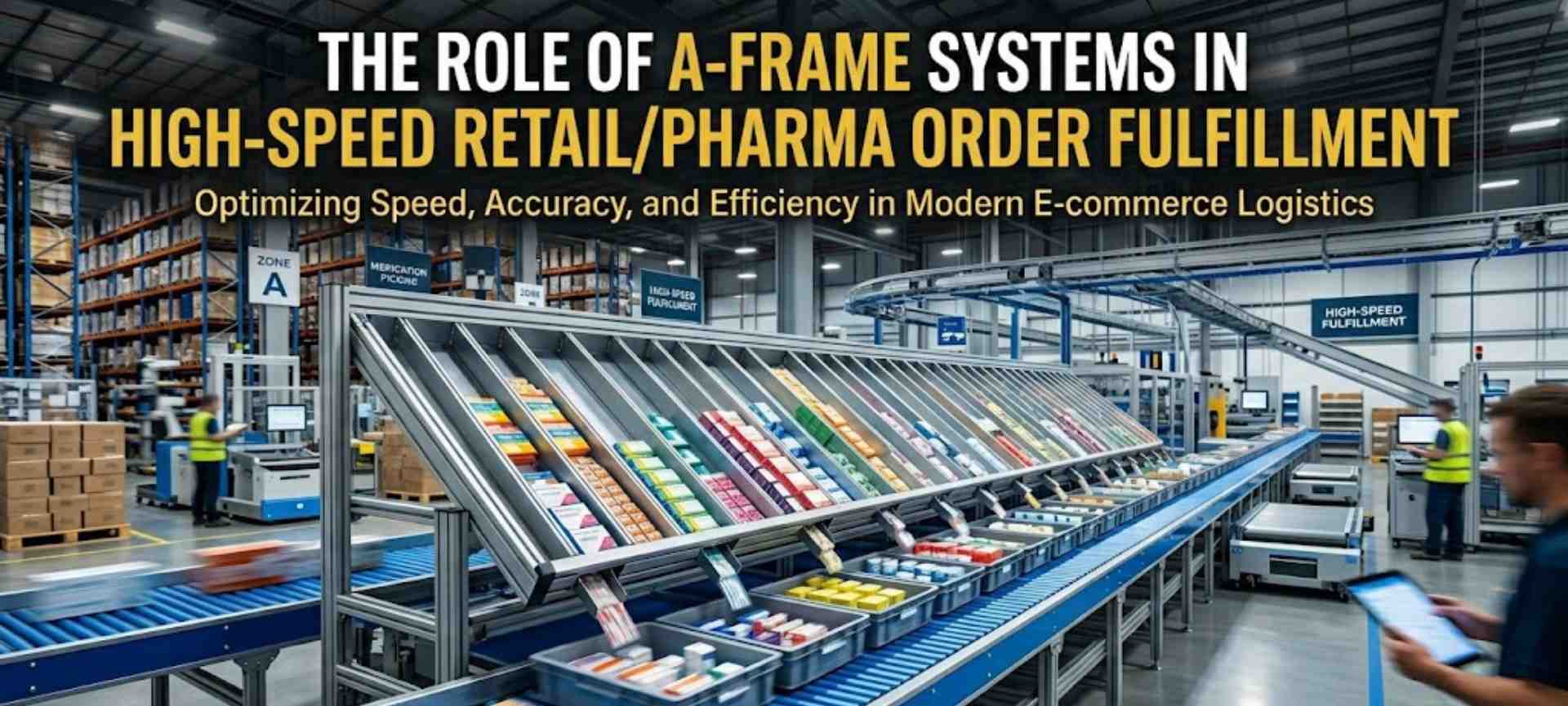
A-frame systems are automated dispensing and picking solutions designed for high-speed order fulfillment. These systems are widely used in industries that manage fast-moving consumer goods, pharmaceuticals, and convenience products.
The structure resembles the shape of the letter “A,” allowing products to be automatically dispensed into containers or conveyor systems with exceptional speed and accuracy.
Why A-Frame Systems Matter
High-Speed Picking
A-frame automation significantly accelerates order processing compared to manual picking methods.
Reduced Human Errors
Automation improves picking accuracy and minimizes incorrect order dispatches.
Space Optimization
Compact system designs maximize storage efficiency within fulfillment centers.
Improved Workforce Productivity
Employees can focus on higher-value operational tasks instead of repetitive manual picking.
For retailers handling thousands of small-item orders daily, A-frame systems provide a scalable solution that improves operational consistency and customer satisfaction.
How These Systems Work Together
Dark stores, micro hubs, and A-frame systems are most effective when integrated into a unified fulfillment ecosystem.
A centralized warehouse may replenish inventory to multiple dark stores and micro hubs based on real-time demand patterns. Automated A-frame systems within these facilities then enable rapid order processing and dispatch.
This interconnected structure supports highly responsive retail operations capable of managing large order volumes with minimal delays.
Businesses adopting this model gain several operational advantages, including:
- Faster delivery timelines
- Better inventory allocation
- Reduced operational costs
- Higher order accuracy
- Improved customer experience
Together, these systems create a strong foundation for scalable retail growth.
Technology’s Role in Fast Retail Transformation
Technology continues to play a vital role in enabling smarter and more connected retail fulfillment operations.
Advanced analytics, automation tools, and intelligent inventory systems are helping retailers make faster decisions and improve operational visibility across their networks.
Technologies such as IoT are enabling real-time monitoring of inventory movement, equipment performance, and facility operations. This improves forecasting accuracy and helps businesses reduce operational inefficiencies.
Retailers are also investing in integrated digital platforms that support better coordination across procurement, storage, fulfillment, and transportation functions.
This transformation is reshaping traditional Supply Chain Management strategies and creating more agile retail ecosystems capable of adapting to rapidly changing market conditions.
Challenges Businesses Must Address
While these fulfillment models offer substantial benefits, successful implementation requires careful planning and execution.
Infrastructure Investment
Automation systems and urban fulfillment facilities require significant upfront investment.
Inventory Coordination
Managing inventory across multiple fulfillment locations demands accurate forecasting and robust operational controls.
Workforce Adaptation
Employees need training to work effectively with automated systems and technology-enabled workflows.
Scalability Planning
Retailers must ensure that operational systems can scale efficiently as order volumes grow.
Organizations that address these challenges strategically can create highly efficient retail operations with long-term competitive advantages.
The Future of Fast Retail
The future of retail will be shaped by speed, convenience, and operational intelligence. Consumers increasingly expect frictionless shopping experiences supported by rapid fulfillment and reliable delivery services.
Dark stores, micro hubs, and A-frame systems are becoming essential components of this transformation. Businesses that invest in these solutions today will be better positioned to meet evolving customer expectations and market demands.
Retailers are also integrating capabilities such as Omnichannel Delivery to create seamless customer experiences across online and offline channels. Additionally, efficient Reverse Logistics systems are becoming increasingly important for handling returns and exchanges without disrupting fulfillment operations.
Modern retail ecosystems are further supported by advanced Warehousing & Micro-Fulfillment strategies that improve inventory accessibility and accelerate dispatch timelines. Businesses are also addressing complex First-Mile Delivery Challenges by optimizing supplier coordination and inbound logistics processes.
To maintain operational excellence, companies are increasingly focusing on End-to-End Distribution models supported by Modern Warehouse Management technologies that enhance visibility, efficiency, and scalability across the supply chain.
Conclusion
Fast retail is no longer defined solely by product availability — it is defined by how quickly and efficiently businesses can fulfill customer expectations.
Dark stores, micro hubs, and A-frame systems are transforming retail fulfillment by enabling faster deliveries, improved inventory management, and scalable operational efficiency. These innovations are helping businesses create resilient and customer-centric retail ecosystems capable of thriving in a highly competitive market.
As consumer expectations continue to evolve, retailers that embrace automation, localized fulfillment, and smart operational infrastructure will gain a significant advantage in the future of retail commerce.