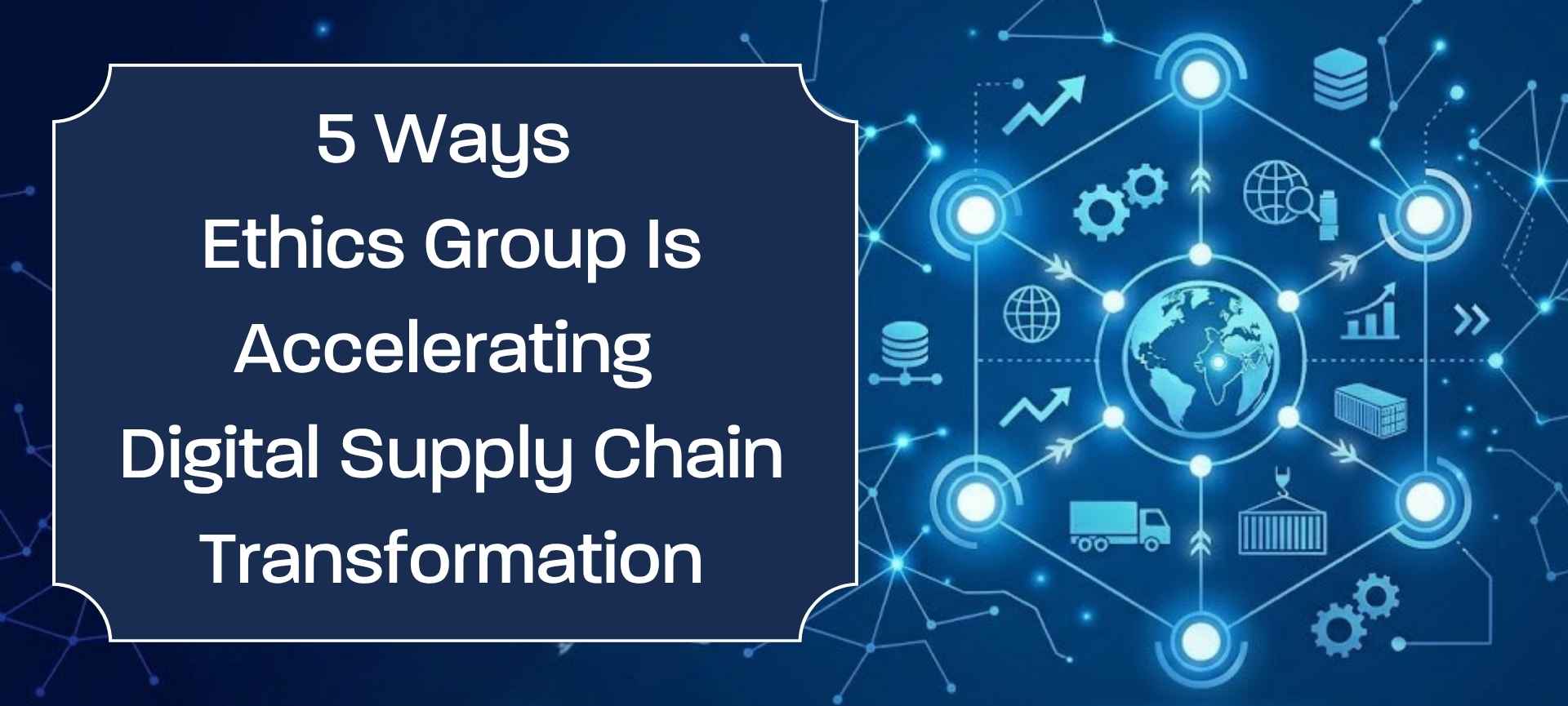
In today’s highly competitive and rapidly evolving business landscape, supply chains are under immense pressure to become faster, more resilient, and cost-efficient. Traditional supply chain models, often reliant on manual processes and historical data, are no longer sufficient to meet modern demands. This is where Artificial Intelligence (AI) and Machine Learning (ML) are transforming the game.
Organizations that strategically adopt AI and ML technologies are not only improving operational efficiency but also gaining a competitive edge through predictive insights, automation, and smarter decision-making. For enterprises looking to scale sustainably, integrating AI into supply chain operations is no longer optional—it is essential.
Understanding AI & Machine Learning in Supply Chain
Artificial Intelligence refers to systems that simulate human intelligence to perform tasks such as decision-making, problem-solving, and pattern recognition. Machine Learning, a subset of AI, enables systems to learn from data and improve performance over time without explicit programming.
In supply chain management, these technologies are used to analyze vast datasets, identify patterns, and generate actionable insights across procurement, inventory, logistics, and distribution.
Key Benefits of AI & ML in Supply Chain Operations
1. Enhanced Demand Forecasting
Accurate demand forecasting is critical for maintaining optimal inventory levels. AI-powered predictive analytics analyzes historical data, market trends, seasonality, and external factors to forecast demand with higher precision.
Impact:
- Reduced stockouts and overstocking
- Improved customer satisfaction
- Optimized production planning
2. Intelligent Inventory Management
Machine learning algorithms continuously monitor inventory levels and automatically adjust reorder points based on real-time demand signals.
Impact:
- Lower holding costs
- Improved warehouse utilization
- Reduced wastage, especially in perishable goods
3. Optimized Route Planning & Logistics
AI-driven route optimization tools consider traffic conditions, weather, fuel costs, and delivery schedules to determine the most efficient routes.
Impact:
- Faster deliveries
- Reduced transportation costs
- Lower carbon emissions
4. Predictive Maintenance
AI systems analyze equipment data to predict potential failures before they occur, ensuring uninterrupted operations in warehouses and transportation fleets.
Impact:
- Reduced downtime
- Lower maintenance costs
- Increased asset lifespan
5. Automation of Repetitive Tasks
From order processing to invoice matching, AI-powered automation reduces dependency on manual processes.
Impact:
- Improved accuracy
- Faster processing times
- Reduced operational costs
Real-World Applications Across Supply Chain Functions
Procurement
AI tools evaluate supplier performance, pricing trends, and risk factors to enable smarter sourcing decisions.
Warehousing
Smart warehouses use AI-enabled robotics for picking, packing, and sorting, significantly improving efficiency and accuracy.
Transportation & Distribution
AI enhances visibility across the logistics network, allowing businesses to track shipments in real time and proactively manage disruptions.
Customer Experience
AI chatbots and predictive systems provide accurate delivery timelines and improve customer engagement.
AI-Driven Supply Chain Resilience
Recent global disruptions have highlighted the need for resilient supply chains. AI plays a critical role in risk management by identifying potential disruptions such as supplier delays, geopolitical issues, or demand fluctuations.
With real-time data analysis, businesses can:
- Quickly adapt to market changes
- Develop contingency plans
- Ensure continuity of operations
Challenges in Implementing AI in Supply Chains
While the benefits are substantial, implementing AI and ML comes with certain challenges:
1. Data Quality & Integration
AI systems rely on high-quality, structured data. Inconsistent or siloed data can hinder effectiveness.
2. High Initial Investment
Deploying AI technologies requires investment in infrastructure, tools, and skilled talent.
3. Change Management
Organizations must align teams, processes, and culture to successfully adopt AI-driven solutions.
4. Cybersecurity Risks
With increased digitization comes the need for robust data protection and cybersecurity frameworks.
Best Practices for Successful AI Adoption
To maximize the benefits of AI in supply chain operations, organizations should follow a structured approach:
- Start with Clear Objectives: Identify specific use cases such as demand forecasting or logistics optimization.
- Invest in Data Infrastructure: Ensure data accuracy, consistency, and accessibility.
- Adopt Scalable Solutions: Choose AI platforms that can grow with business needs.
- Upskill Workforce: Train employees to work alongside AI systems.
- Collaborate with Experts: Partner with experienced supply chain solution providers for seamless implementation.
Future of AI in Supply Chain Management
The future of supply chain management is intelligent, autonomous, and highly adaptive. Emerging trends include:
- AI-powered Digital Twins for real-time simulation
- Hyperautomation across end-to-end supply chain processes
- Blockchain integration for transparency and traceability
- Advanced robotics in warehousing and fulfillment
Organizations that embrace these innovations will be better positioned to navigate uncertainties and achieve long-term growth.
Conclusion
AI and Machine Learning are revolutionizing supply chain management by enabling smarter, faster, and more efficient operations. From predictive analytics to automation and real-time visibility, these technologies empower businesses to optimize every aspect of their supply chain.
For companies aiming to stay competitive in an increasingly dynamic market, leveraging AI is not just about efficiency—it’s about building a future-ready supply chain that is resilient, agile, and data-driven.
At Ethics Group, integrating advanced technologies with supply chain expertise can unlock new levels of operational excellence and business value.

.jpg)