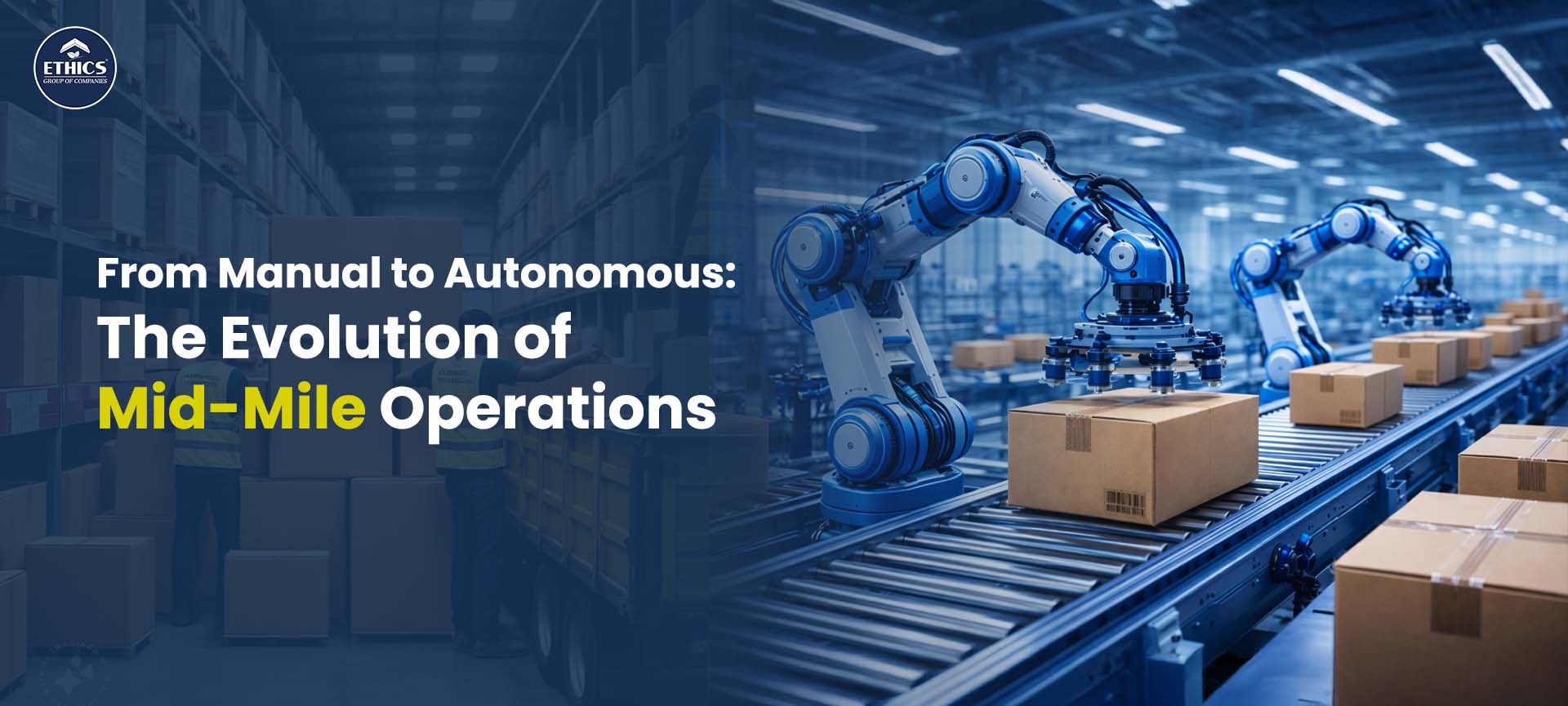
In today’s dynamic supply chain ecosystem, the mid-mile segment—responsible for transporting goods between warehouses, distribution centers, and fulfillment hubs—has emerged as a critical driver of operational efficiency. Traditionally overlooked in favor of first-mile procurement and last-mile delivery, mid-mile operations are now undergoing a significant transformation.
The shift from manual processes to autonomous systems is not just a technological upgrade—it represents a strategic evolution. Businesses aiming to scale, reduce costs, and enhance visibility are investing heavily in digital and autonomous mid-mile solutions.
Understanding Mid-Mile Operations
Mid-mile logistics refers to the movement of goods between nodes within the supply chain, such as:
- Supplier warehouses to regional distribution centers
- Distribution centers to fulfillment hubs
- Inter-city or inter-warehouse transfers
Unlike last-mile delivery, which focuses on customer experience, mid-mile operations prioritize efficiency, cost optimization, and network synchronization.
The Traditional Manual Approach
Historically, mid-mile operations have been heavily dependent on manual processes, including:
- Paper-based documentation
- Manual route planning
- Limited real-time tracking
- Dependency on human-driven fleets
Challenges in Manual Mid-Mile Systems
- Limited Visibility
Lack of real-time tracking leads to inefficiencies and delays. - High Operational Costs
Inefficient routing and idle time increase fuel and labor expenses. - Data Silos
Disconnected systems restrict data-driven decision-making. - Scalability Issues
Manual coordination becomes increasingly complex as networks grow.
These limitations have created a strong need for transformation.
The Shift Toward Digitization
The first phase of evolution involved digitizing mid-mile operations through technologies such as:
- Transportation Management Systems (TMS)
- GPS tracking and telematics
- Cloud-based logistics platforms
Key Benefits of Digitization
- Real-time shipment tracking
- Automated route optimization
- Centralized data management
- Improved fleet utilization
Digitization laid the foundation for more advanced capabilities, enabling organizations to move toward predictive and autonomous systems.
Rise of Autonomous Mid-Mile Operations
The next phase in this evolution is the adoption of autonomous and semi-autonomous technologies that minimize human intervention and maximize efficiency.
Key Components of Autonomous Mid-Mile Logistics
1. AI-Driven Route Optimization
Artificial intelligence analyzes traffic, weather, and demand patterns to determine optimal routes in real time.
2. Autonomous Vehicles
Self-driving trucks and platooning technologies are reducing dependency on human drivers while improving safety and efficiency.
3. IoT-Enabled Fleet Management
Connected devices provide real-time data on vehicle health, location, and cargo conditions.
4. Predictive Analytics
Advanced analytics forecast demand, identify bottlenecks, and enable proactive decision-making.
5. Control Towers
Centralized command centers provide end-to-end visibility and control across the supply chain network.
Business Impact of Autonomous Mid-Mile Operations
Organizations adopting autonomous mid-mile solutions are experiencing measurable benefits:
1. Cost Optimization
- Reduced fuel consumption through optimized routes
- Lower labor costs due to automation
- Minimized delays and penalties
2. Enhanced Visibility
- Real-time tracking across the network
- Improved transparency for stakeholders
3. Faster Turnaround Time
- Reduced transit delays
- Improved scheduling accuracy
4. Scalability
- Seamless expansion of logistics networks
- Efficient handling of increased shipment volumes
5. Sustainability
- Reduced carbon footprint through optimized operations
- Better resource utilization
Industry Use Cases
E-commerce & Retail
High-volume inter-city transfers require real-time tracking and rapid replenishment cycles.
FMCG
Time-sensitive deliveries demand optimized routes and minimal delays.
Pharmaceuticals
Temperature-sensitive shipments benefit from IoT-enabled monitoring and predictive alerts.
Manufacturing
Just-in-time inventory models rely heavily on efficient mid-mile logistics.
Challenges in Transitioning to Autonomous Systems
Despite its advantages, the transition is not without challenges:
- High Initial Investment in technology and infrastructure
- Regulatory Constraints around autonomous vehicles
- Integration Complexity with legacy systems
- Skill Gaps in managing advanced technologies
However, these challenges are gradually being addressed through innovation, policy development, and industry collaboration.
Future of Mid-Mile Logistics
The future of mid-mile operations will be defined by:
- Fully autonomous freight corridors
- AI-powered decision-making systems
- Hyper-connected logistics ecosystems
- Integration with smart cities and infrastructure
Organizations that invest early in these capabilities will gain a significant competitive advantage.
Strategic Recommendations for Businesses
To successfully transition from manual to autonomous mid-mile operations, businesses should:
- Invest in Digital Infrastructure
Implement scalable TMS and cloud-based platforms. - Adopt a Phased Approach
Start with digitization before moving to automation. - Leverage Data Analytics
Use data to drive continuous improvement. - Collaborate with Technology Partners
Partner with logistics and tech providers for seamless implementation. - Focus on Change Management
Train teams and align organizational processes with new technologies.
Conclusion
The evolution of mid-mile operations from manual to autonomous is a transformative journey that is reshaping the supply chain landscape. As businesses strive for efficiency, visibility, and scalability, embracing automation and advanced technologies is no longer optional—it is a strategic necessity.
Organizations that proactively adapt to this shift will not only optimize their logistics operations but also position themselves as leaders in the next generation of supply chain innovation.