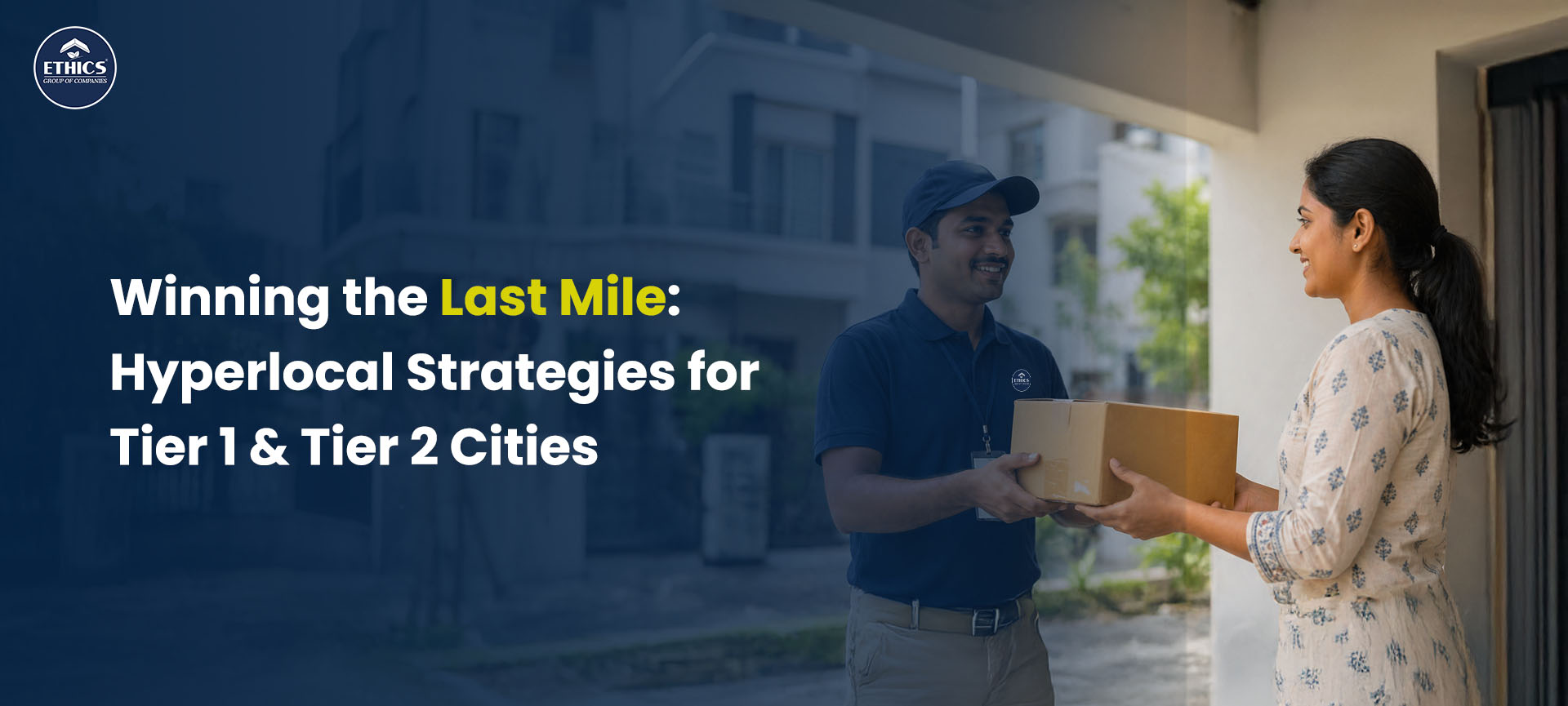
In today’s fast-paced, convenience-driven economy, the last mile is no longer just a delivery function—it’s a defining moment of customer experience. For businesses operating in India’s dynamic urban ecosystem, especially across Tier 1 and Tier 2 cities, mastering hyperlocal logistics is becoming a competitive necessity rather than a strategic advantage.
From same-day delivery expectations in metro cities to rapidly growing demand in emerging urban centers, organizations must rethink how they approach the final leg of the supply chain. This is where hyperlocal strategies come into play—bridging speed, efficiency, and customer satisfaction.
Understanding the Last Mile Challenge
The last mile refers to the final step in the delivery process—from a distribution hub to the end customer. While it accounts for a relatively short distance, it contributes to nearly 50% of total logistics costs.
Key challenges include:
- Traffic congestion in Tier 1 cities
- Infrastructure gaps in Tier 2 cities
- Rising customer expectations for faster delivery
- High delivery costs and failed delivery attempts
- Fragmented demand patterns
For businesses, these challenges translate into reduced margins and inconsistent service quality if not managed strategically.
Why Hyperlocal is the Future
Hyperlocal logistics focuses on fulfilling demand within a limited geographic area using localized inventory, micro-fulfillment centers, and agile delivery networks.
Benefits of Hyperlocal Strategies:
- Faster delivery timelines (same-day or within hours)
- Reduced transportation costs
- Improved inventory turnover
- Enhanced customer satisfaction
- Better adaptability to local demand patterns
In Tier 1 cities like Delhi, Mumbai, and Bangalore, hyperlocal models address speed and congestion. In Tier 2 cities like Jaipur, Lucknow, and Indore, they help overcome infrastructure and accessibility challenges.
Hyperlocal Strategies for Tier 1 Cities
Tier 1 cities are characterized by dense populations, high demand volumes, and intense competition. Winning here requires precision and agility.
1. Micro-Fulfillment Centers (MFCs)
Setting up small, strategically located warehouses closer to customers reduces delivery time significantly.
- Enables same-day or even 2-hour delivery
- Reduces dependency on central warehouses
- Improves inventory availability
2. AI-Driven Route Optimization
Advanced route planning tools help navigate traffic congestion and reduce delivery time.
- Real-time traffic updates
- Dynamic rerouting
- Fuel cost optimization
3. Dark Stores for Quick Commerce
Retailers are increasingly adopting dark stores dedicated to online orders.
- Faster picking and packing
- No in-store customer interference
- Ideal for grocery and FMCG sectors
4. Sustainable Delivery Models
Electric vehicles (EVs) and bicycle deliveries are gaining traction.
- Lower carbon footprint
- Cost-efficient in the long run
- Suitable for short-distance deliveries
Hyperlocal Strategies for Tier 2 Cities
Tier 2 cities present a different set of challenges and opportunities. While demand is growing rapidly, infrastructure and logistics networks are still evolving.
1. Localized Warehousing
Instead of large centralized hubs, businesses should invest in smaller regional warehouses.
- Better reach in semi-urban areas
- Reduced delivery lead time
- Cost-effective operations
2. Partnerships with Local Delivery Networks
Collaborating with local logistics providers ensures better last-mile connectivity.
- Local expertise
- Faster delivery in remote areas
- Lower operational complexity
3. Flexible Delivery Models
Cash-on-delivery (COD), scheduled deliveries, and pickup points are crucial.
- Builds trust among customers
- Reduces failed delivery attempts
- Enhances convenience
4. Technology Adoption
Digitization is key to scaling operations efficiently.
- Order tracking systems
- Inventory visibility
- Customer communication tools
Role of Technology in Hyperlocal Logistics
Technology acts as the backbone of any successful hyperlocal strategy.
Key technologies include:
- Warehouse Management Systems (WMS) for inventory control
- Transportation Management Systems (TMS) for route planning
- AI & Machine Learning for demand forecasting
- IoT-enabled tracking for real-time visibility
By leveraging these tools, businesses can make data-driven decisions and optimize their last-mile operations.
Customer Experience: The Ultimate Differentiator
In the last mile, customer experience is everything. A delayed or failed delivery can significantly impact brand perception.
Best practices:
- Real-time order tracking
- Accurate delivery time estimates
- Easy return and refund processes
- Proactive communication
Hyperlocal strategies enable businesses to meet these expectations consistently.
Sustainability in Last-Mile Delivery
Sustainability is becoming a critical focus area in logistics.
Key initiatives:
- Use of electric vehicles
- Route optimization to reduce emissions
- Eco-friendly packaging
- Consolidated deliveries
Companies that adopt green logistics not only reduce costs but also enhance their brand image.
Case for Integrated Supply Chain Solutions
Hyperlocal logistics cannot function in isolation. It must be part of a broader, integrated supply chain strategy.
Organizations need:
- End-to-end visibility
- Seamless coordination between warehousing and transportation
- Scalable infrastructure
- Technology-driven operations
This is where experienced supply chain partners play a crucial role in designing and executing efficient last-mile strategies.
Conclusion
Winning the last mile in Tier 1 and Tier 2 cities requires more than speed—it demands a deep understanding of local dynamics, customer behavior, and operational efficiency.
Hyperlocal strategies are no longer optional; they are the foundation of modern logistics. Businesses that invest in localized infrastructure, leverage technology, and prioritize customer experience will not only overcome last-mile challenges but also gain a sustainable competitive edge.
As India’s urban landscape continues to evolve, the future of logistics will be defined by how effectively organizations can deliver—faster, smarter, and closer to the customer.