The rapid expansion of e-commerce has transformed customer expectations around delivery speed, inventory availability, and order accuracy. While businesses continue to compete on service levels and delivery performance, sustainability has emerged as an equally important business priority.
Consumers, investors, regulators, and enterprise customers are increasingly evaluating companies based on their environmental impact and operational responsibility. As a result, fulfillment strategies can no longer focus solely on speed and cost. Organizations must now design fulfillment networks that balance growth, customer satisfaction, operational efficiency, and sustainability.
For e-commerce businesses, sustainable fulfillment is no longer a corporate social responsibility initiative. It has become a strategic business requirement that influences profitability, resilience, customer loyalty, and long-term competitiveness.
This shift is driving the adoption of sustainable fulfillment models that reduce waste, optimize transportation, improve resource utilization, and create more resilient supply chain operations.
Understanding Sustainable Fulfillment
Sustainable fulfillment refers to the process of managing inventory, warehousing, packaging, transportation, and delivery operations in a way that minimizes environmental impact while maintaining service quality and business performance.
Rather than focusing on isolated sustainability initiatives, leading organizations are integrating sustainability into every stage of the fulfillment lifecycle.
A sustainable fulfillment strategy typically focuses on:
- Efficient inventory positioning
- Optimized warehouse operations
- Reduced transportation emissions
- Environmentally responsible packaging
- Energy-efficient facilities
- Data-driven route optimization
- Waste reduction initiatives
- Reverse logistics optimization
The goal is to create a fulfillment ecosystem that supports business growth without creating unnecessary environmental or operational burdens.
Industry Challenges Driving the Need for Sustainable Fulfillment
Rising Delivery Volumes
Global e-commerce growth continues to generate unprecedented shipment volumes. More orders often mean more transportation movements, packaging materials, and warehouse activity.
Without strategic optimization, increased order volumes can significantly increase carbon emissions and operational costs.
Escalating Logistics Costs
Fuel costs, labor expenses, warehouse rentals, and transportation charges continue to rise across major markets.
Organizations are under pressure to improve efficiency while maintaining profitability and service standards.
Customer Demand for Sustainable Practices
Modern consumers increasingly prefer brands that demonstrate environmental responsibility.
Many customers now consider sustainable delivery options, eco-friendly packaging, and carbon-conscious operations when making purchasing decisions.
Regulatory Compliance Requirements
Governments worldwide are introducing stricter environmental regulations related to emissions, energy consumption, waste management, and transportation efficiency.
Businesses must proactively adapt their fulfillment operations to meet evolving compliance requirements.
Supply Chain Disruptions
Recent global disruptions have highlighted the importance of resilient and flexible fulfillment networks.
Sustainable fulfillment models often improve operational resilience by reducing dependency on inefficient processes and centralized infrastructure.
Key Sustainable Fulfillment Models Supporting E-commerce Growth
1. Distributed Fulfillment Networks
Traditional fulfillment strategies often rely on a limited number of large distribution centers serving broad geographic regions.
While effective in some scenarios, centralized networks frequently result in longer transportation distances and higher delivery emissions.
Distributed fulfillment models strategically position inventory closer to customer demand centers.
Benefits include:
- Reduced transportation miles
- Faster delivery times
- Lower shipping costs
- Improved inventory responsiveness
- Reduced carbon footprint
As customer expectations for same-day and next-day delivery continue to grow, distributed networks are becoming increasingly important.
2. Micro-Fulfillment Centers
Micro-fulfillment centers are smaller, technology-enabled facilities located closer to urban demand clusters.
These facilities help organizations process orders rapidly while minimizing transportation distances.
For high-volume e-commerce businesses, micro-fulfillment centers can significantly improve:
- Delivery speed
- Order processing efficiency
- Inventory accessibility
- Urban logistics performance
By reducing the distance between products and customers, businesses can simultaneously improve service levels and sustainability outcomes.
3. Green Warehousing Operations
Warehouses represent a significant component of fulfillment-related energy consumption.
Leading organizations are investing in environmentally responsible warehouse operations through:
Energy-Efficient Infrastructure
Examples include:
- LED lighting systems
- Smart energy management systems
- Motion-controlled lighting
- Energy-efficient equipment
Renewable Energy Adoption
Many modern facilities are incorporating:
- Solar power systems
- Renewable electricity sourcing
- Battery storage solutions
Resource Optimization
Advanced warehouse management systems help reduce:
- Energy waste
- Equipment idle time
- Space utilization inefficiencies
Green warehousing initiatives often generate both environmental and financial benefits.
4. Sustainable Transportation Models
Transportation remains one of the largest contributors to fulfillment-related emissions.
Organizations are increasingly adopting transportation strategies that reduce environmental impact without compromising delivery performance.
Route Optimization
Advanced analytics platforms optimize delivery routes based on:
- Traffic conditions
- Delivery density
- Vehicle utilization
- Geographic constraints
This reduces fuel consumption and improves delivery efficiency.
Consolidated Shipments
Shipment consolidation reduces the number of transportation movements required to fulfill customer orders.
Benefits include:
- Lower transportation costs
- Reduced emissions
- Improved vehicle utilization
Alternative Fuel Vehicles
Organizations are gradually introducing:
- Electric delivery vehicles
- Hybrid transportation fleets
- Alternative fuel solutions
These initiatives support long-term sustainability goals while preparing businesses for future regulatory requirements.
5. Sustainable Packaging Strategies
Packaging waste has become a major concern across the e-commerce industry.
Many organizations are redesigning packaging programs to reduce environmental impact while protecting products during transit.
Key approaches include:
Right-Sized Packaging
Using packaging that matches product dimensions helps reduce:
- Material consumption
- Transportation inefficiencies
- Shipping costs
Recyclable Materials
Businesses are increasingly replacing traditional packaging materials with recyclable alternatives.
Reduced Packaging Waste
Eliminating unnecessary fillers and excess packaging improves both sustainability and customer experience.
The Role of Technology in Sustainable Fulfillment
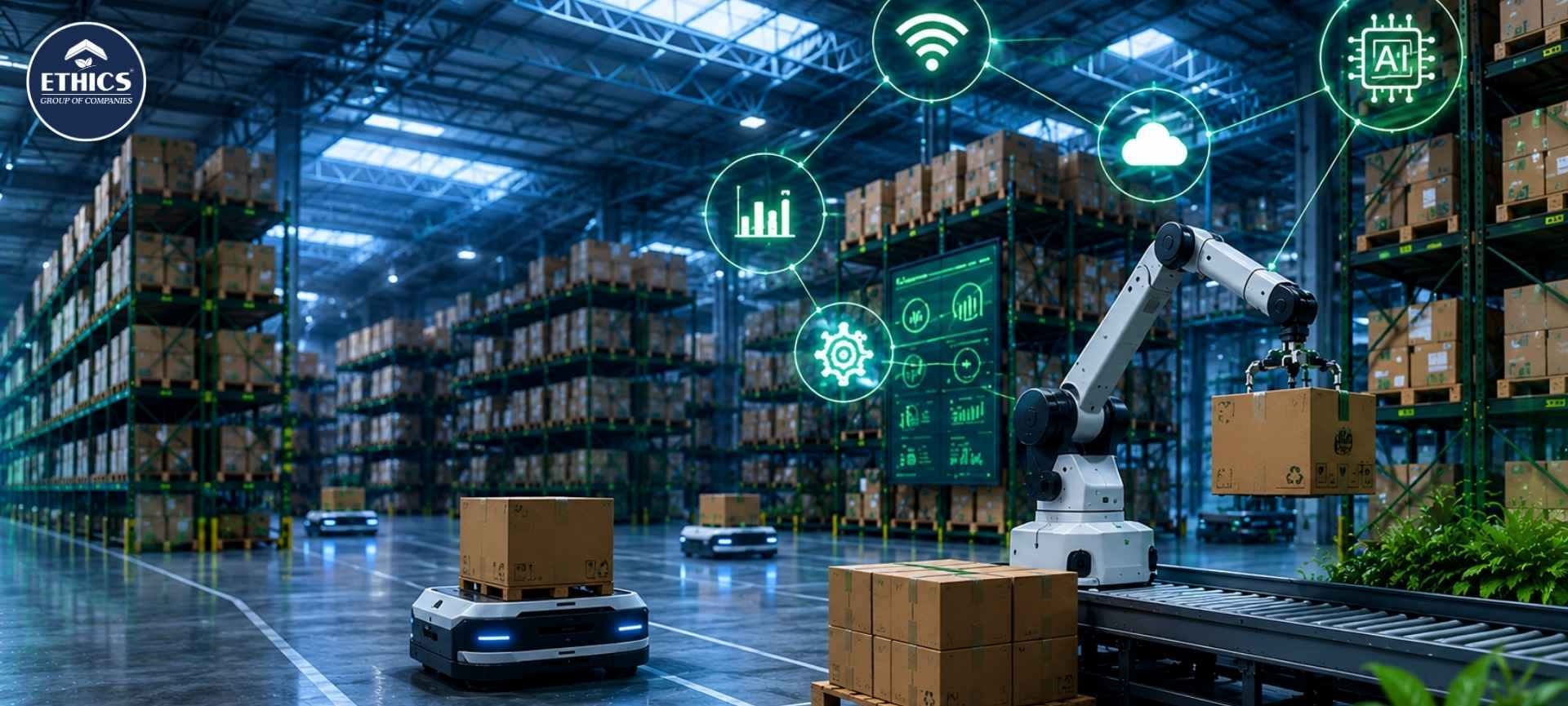
Technology serves as the foundation for modern sustainable fulfillment operations.
Organizations leveraging digital transformation initiatives can identify inefficiencies, optimize resources, and improve visibility across fulfillment networks.
Key technologies include:
Warehouse Management Systems (WMS)
A modern WMS helps optimize:
- Inventory placement
- Labor productivity
- Resource utilization
- Order accuracy
Artificial Intelligence and Analytics
AI-driven forecasting enables organizations to:
- Improve demand planning
- Reduce excess inventory
- Minimize waste
- Improve fulfillment efficiency
Real-Time Visibility Platforms
Supply chain visibility solutions provide actionable insights that support better operational decisions and sustainability outcomes.
Automation Solutions
Warehouse automation technologies improve throughput while reducing resource consumption and operational inefficiencies.
Business Benefits of Sustainable Fulfillment Models
Organizations implementing sustainable fulfillment strategies often experience benefits beyond environmental improvements.
Reduced Operating Costs
Efficient transportation, optimized inventory placement, and reduced waste contribute directly to cost savings.
Improved Customer Experience
Faster deliveries, accurate fulfillment, and environmentally responsible practices strengthen customer trust and loyalty.
Enhanced Brand Reputation
Sustainability initiatives increasingly influence purchasing decisions among both consumers and enterprise buyers.
Greater Operational Resilience
Distributed and optimized fulfillment networks are often better positioned to respond to disruptions and demand fluctuations.
Stronger Competitive Advantage
Organizations that integrate sustainability into their fulfillment operations can differentiate themselves in increasingly crowded markets.
Real-World Application Example
Consider an e-commerce retailer serving customers across multiple metropolitan regions.
A traditional centralized fulfillment network may require products to travel hundreds of kilometers before reaching customers.
By implementing a distributed fulfillment strategy supported by micro-fulfillment centers, optimized transportation routes, and sustainable packaging programs, the retailer can:
- Reduce delivery distances
- Lower transportation costs
- Improve delivery speed
- Minimize emissions
- Enhance customer satisfaction
The result is a fulfillment model that supports growth while improving sustainability performance.
Future Trends in Sustainable Fulfillment
The future of e-commerce fulfillment will be increasingly shaped by sustainability-driven innovation.
Key trends include:
AI-Powered Network Optimization
Advanced analytics will continuously optimize inventory placement, transportation planning, and resource allocation.
Electrification of Delivery Fleets
Electric vehicle adoption is expected to accelerate across last-mile delivery networks.
Carbon Visibility and Reporting
Organizations will increasingly measure and report fulfillment-related emissions to customers, investors, and regulators.
Circular Supply Chain Models
Businesses will invest more heavily in repair, reuse, recycling, and return optimization initiatives.
Autonomous Logistics Technologies
Automation and autonomous transportation solutions will further improve efficiency while reducing environmental impact.
Conclusion
Sustainable fulfillment is no longer a future consideration—it is a strategic requirement for modern e-commerce growth. Businesses that successfully balance operational efficiency, customer expectations, and environmental responsibility are better positioned to achieve long-term profitability and resilience.
By adopting distributed fulfillment networks, sustainable transportation practices, green warehousing initiatives, and technology-driven optimization, organizations can create fulfillment models that support both business expansion and sustainability goals. Companies seeking to build future-ready logistics operations can benefit from working with experienced supply chain partners such as Ethics Group to align operational performance with sustainable growth objectives.