
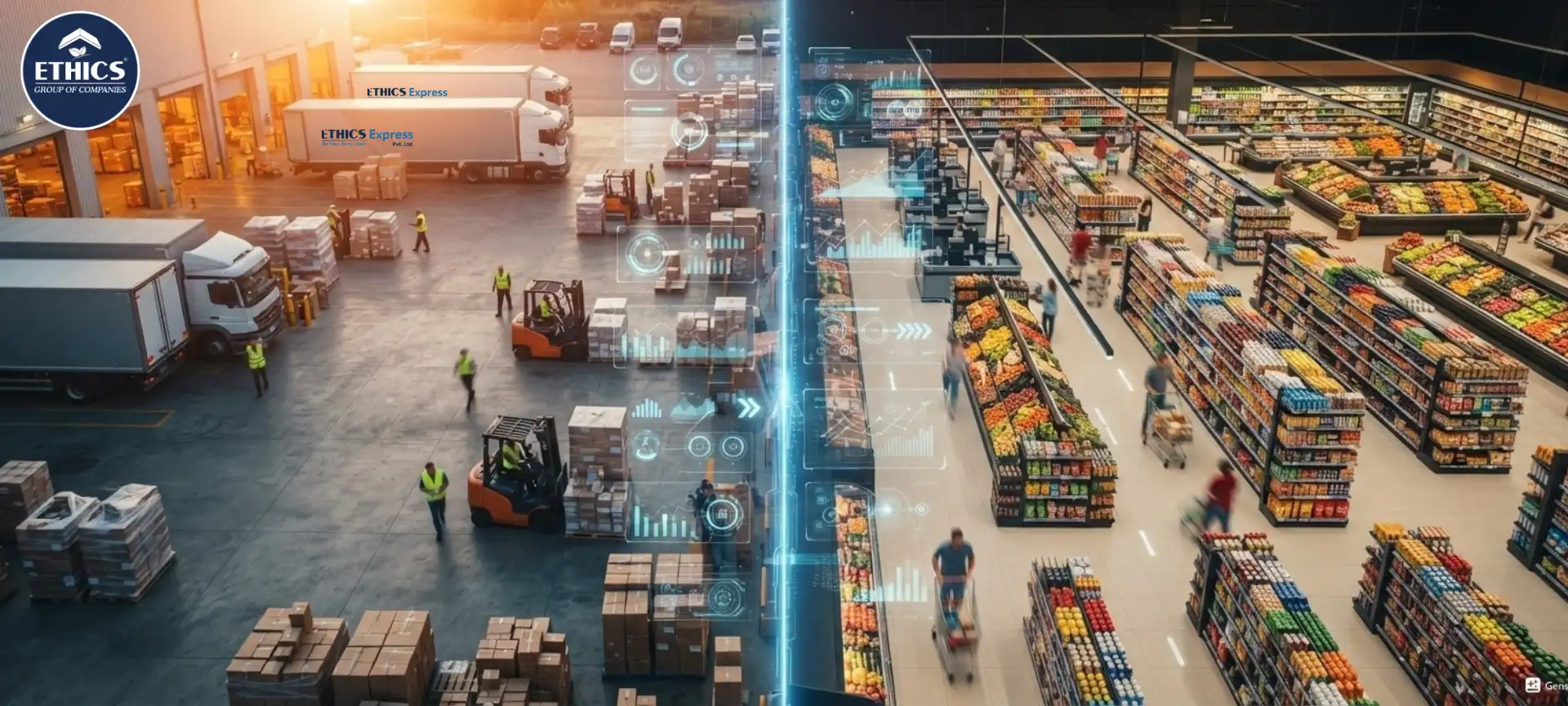
Retail and distribution businesses are under growing pressure to keep shelves stocked, fulfill orders faster, and maintain accurate inventory across stores, warehouses, and omnichannel networks. The challenge is no longer limited to moving products from a distribution center to a store. The real performance gap often appears inside the store itself—between the backroom, the shelf, and the systems used to manage replenishment.
A product may be available in the building but still unavailable to the customer if it has not moved from the stockroom to the aisle at the right time. This is where digitized store replenishment is becoming a critical capability for retailers, distributors, and supply chain leaders.
Digitizing store replenishment means replacing manual, reactive, and fragmented replenishment processes with connected, data-driven workflows that improve visibility, trigger timely restocking, and align in-store execution with broader distribution operations. For B2B retailers, FMCG businesses, grocery chains, pharmacy networks, and multi-location store operators, this shift has direct implications for revenue protection, labor productivity, order fulfillment rates, and customer experience.
This blog explores why store replenishment needs to evolve, the operational barriers businesses face, and how digital replenishment models can create a faster, more accurate, and more resilient retail supply chain.
Why Store Replenishment Has Become a Strategic Supply Chain Priority
In many retail environments, replenishment still depends on periodic shelf checks, staff judgment, paper-based picking lists, or delayed system updates. These methods may work at low scale, but they become inefficient when product movement is fast, SKU complexity is high, and customer expectations are unforgiving.
Today’s replenishment environment is shaped by multiple pressures:
-
Higher SKU counts and shorter product cycles
-
Omnichannel demand from stores, marketplaces, and direct delivery channels
-
Tighter labor availability and rising operating costs
-
Greater demand volatility across regions and store formats
-
Customer intolerance for out-of-stock situations
-
The need to synchronize store inventory with central warehouse systems
In this environment, replenishment is no longer a basic store activity. It is an operational control point that affects inventory availability, sales conversion, labor efficiency, and service levels across the network.
When replenishment is digitized, stores become active nodes in the wider fulfillment ecosystem rather than disconnected endpoints.
The Problem with Traditional Backroom-to-Aisle Replenishment
Many replenishment failures are not caused by a lack of inventory in the network. They are caused by poor visibility and delayed movement within the last few meters of the retail operation.
Common operational gaps include:
1. Shelf stock-outs despite available backroom inventory
A product may be physically present in the store but not visible on the shelf. Without real-time alerts or task-driven replenishment, these hidden stock-outs reduce sales and distort demand signals.
2. Delayed replenishment decisions
If replenishment depends on staff observation rather than system-generated triggers, restocking often happens after the shelf is already empty rather than before.
3. Inaccurate store inventory records
Manual counting, delayed scanning, and inconsistent stock movement updates create mismatches between actual and recorded inventory. This weakens planning accuracy and leads to poor replenishment decisions.
4. Inefficient labor deployment
Store teams spend time searching for products, checking stock manually, or duplicating tasks across shifts. This increases labor cost without improving shelf availability.
5. Poor alignment with distribution and procurement
If store-level replenishment data is not connected to upstream planning systems, replenishment remains reactive. Distribution centers, transport teams, and planners receive weak signals and cannot respond efficiently.
6. Limited visibility across locations
Retail chains operating across multiple stores often lack a unified view of replenishment execution, shelf gaps, stock movement, and exception trends.
These problems directly affect on-shelf availability, inventory turnover, fulfillment accuracy, and working capital efficiency.
What Digitized Store Replenishment Actually Means
Digitized replenishment is not simply about using handheld scanners or replacing paper checklists. It is about creating a connected replenishment environment where stock movement, shelf availability, inventory updates, and replenishment tasks are driven by system intelligence.
A digitized replenishment model typically includes:
-
Real-time inventory visibility across shelf, backroom, and store systems
-
Automated replenishment triggers based on shelf thresholds, sales velocity, and stock movement
-
Mobile task allocation for store associates
-
Barcode or RFID-based stock confirmation
-
Integration with warehouse, transport, and order management systems
-
Analytics for replenishment performance, stock-out patterns, and labor productivity
-
Forecast-linked replenishment planning for high-demand and seasonal products
The objective is simple: ensure the right stock reaches the right shelf at the right time with minimal manual intervention and maximum visibility.
Core Technologies Driving Replenishment Digitization
1. Mobile-first task management
Store associates can receive replenishment tasks through mobile devices based on system alerts rather than verbal instructions or periodic checks. This helps prioritize urgent shelf gaps, reduce response time, and improve task accountability.
2. Real-time inventory capture
Barcode scanning, RFID, and connected inventory systems improve stock accuracy between the backroom and the aisle. As stock is moved and replenished, inventory records update faster and support better downstream decisions.
3. Demand-linked replenishment triggers
Replenishment decisions can be linked to actual sales, shelf depletion, and local demand patterns rather than static routines. This strengthens Inventory & Demand Planning by making store-level execution more responsive.
4. AI-led replenishment intelligence
AI can identify replenishment patterns, forecast shelf risk, recommend restocking priorities, and flag exceptions such as unusual consumption or recurring stock-outs. Over time, this improves replenishment timing and reduces avoidable lost sales.
5. Connected warehouse-store visibility
When store replenishment data connects with warehouse and transportation systems, businesses can improve allocation, dispatch planning, and store servicing frequency. This is especially important in multi-node retail networks.
6. Sensor-based visibility and automation
The growing role of AI & IoT in Warehousing is extending into retail replenishment through connected devices, smart inventory monitoring, and real-time movement visibility across storage and fulfillment environments.
How Digitized Replenishment Improves Business Performance
Higher on-shelf availability
The most immediate benefit is fewer stock-outs on the shelf. Automated replenishment alerts help ensure products move from the backroom before the shelf runs empty. This protects sales and improves customer confidence.
Better inventory accuracy
Frequent stock confirmation and digital movement records reduce discrepancies between actual and system inventory. Better inventory accuracy improves planning, allocation, and store-level order decisions.
Faster in-store fulfillment
For retailers serving click-and-collect, same-day delivery, or store-based picking, replenishment quality directly affects order fulfillment speed. If the shelf and backroom are not synchronized, picking teams waste time searching for stock or substituting items.
Improved labor productivity
Digitized replenishment reduces the time spent on manual shelf audits, stock searches, and ad hoc restocking. Store teams can work from prioritized tasks and complete more productive replenishment cycles with fewer interruptions.
Stronger planning and forecasting
Digitized replenishment creates cleaner, more reliable demand and stock movement data. This helps merchandising, procurement, and supply chain teams improve forecasting and reduce both stock-outs and overstocking.
Better store-level operational control
Store managers and supply chain leaders gain visibility into replenishment completion rates, recurring stock gaps, delayed tasks, and category-specific issues. That makes it easier to improve execution consistently across locations.
Operational Use Cases Across Retail and Distribution
Grocery and FMCG chains
Fast-moving categories require rapid replenishment cycles and tight shelf availability control. Digitized replenishment helps reduce lost sales in high-turnover SKUs and improves response during promotions and seasonal peaks.
Pharmacy and healthcare retail
Product availability is business-critical in pharmacy environments. Digitized replenishment improves stock accuracy, supports expiry-sensitive inventory handling, and helps maintain service continuity for essential items.
Apparel and lifestyle retail
Frequent assortment changes and size-level complexity make manual replenishment difficult. A digital replenishment model supports faster backroom movement, improved availability of popular variants, and better visibility across categories.
Electronics and specialty retail
For high-value inventory, digital tracking supports tighter stock control and more disciplined replenishment execution while reducing shrinkage and misplaced stock.
Store-led fulfillment and quick commerce models
Retailers using stores as fulfillment nodes need rapid stock visibility and replenishment discipline. This becomes even more important in formats influenced by Dark Stores and hyperlocal delivery models, where product availability and picking speed directly affect customer service.
The Link Between Replenishment and End-to-End Supply Chain Performance
Store replenishment is often treated as a downstream retail activity, but it has direct implications for broader Supply Chain Management performance.
When replenishment data is digitized and connected, it improves:
-
Store demand visibility for planners
-
Warehouse replenishment planning for fast-moving SKUs
-
Inter-store transfer decisions
-
Supplier and procurement planning
-
Delivery scheduling to stores
-
Stock balancing across the network
-
Service-level reporting for category and operations teams
This is where digitized replenishment supports End-to-End Distribution. It creates a tighter feedback loop between stores, fulfillment centers, transport operations, and planning teams, reducing latency in the supply chain and improving execution quality.
The Role of Warehousing and Logistics Partners
For many retail businesses, digitizing replenishment also requires stronger upstream execution from logistics and fulfillment partners. Store replenishment cannot operate effectively if inbound supply is inconsistent, warehouse dispatches are inaccurate, or store orders are fulfilled late.
This is why businesses increasingly evaluate their logistics ecosystem more strategically, including Modern Warehousing capabilities, system integration maturity, and the ability of 3PL Service Providers to support replenishment-driven distribution models.
In sectors with large store footprints or variable regional demand, Outsourcing Logistics can also help businesses improve replenishment performance through scalable warehousing, transport coordination, and better execution support across locations.
Challenges to Watch During Implementation
Digitized replenishment offers clear benefits, but execution matters. Businesses typically face five implementation barriers:
1. Poor master data quality
If SKU, location, shelf, or inventory data is inconsistent, replenishment automation will generate unreliable signals.
2. Weak integration between systems
Store systems, ERP, WMS, and order platforms must exchange data effectively. Without integration, replenishment remains partially manual.
3. Low process discipline at store level
Technology cannot fix poor operational execution on its own. Store workflows, scan compliance, stock movement discipline, and accountability structures must be aligned.
4. Inadequate change management
Store teams need practical training, clear task design, and measurable KPIs to adopt new replenishment processes successfully.
5. Misalignment between replenishment and transport cadence
Store replenishment quality is also influenced by how often inventory arrives, how exceptions are handled, and whether inbound servicing supports real store demand. In some networks, these constraints overlap with broader First-Mile Delivery Challenges and upstream dispatch variability.
Future of Store Replenishment: Smarter, Faster, More Predictive
The next phase of replenishment will move beyond digitization into predictive orchestration. Retailers are increasingly investing in:
-
AI-based replenishment forecasting at SKU-store level
-
Computer vision and smart shelf monitoring
-
Exception-led replenishment workflows
-
Unified inventory across warehouse, store, and fulfillment channels
-
Micro-fulfillment-enabled store replenishment models
-
Deeper integration between store operations and transport scheduling
As retail supply chains become more distributed, replenishment will no longer be a simple in-store routine. It will become a real-time decision layer connected to inventory strategy, fulfillment performance, and customer service.
Conclusion
Digitizing store replenishment from backroom to aisle is no longer just an operational improvement project. It is a supply chain capability that directly influences shelf availability, order fulfillment, labor productivity, inventory accuracy, and retail responsiveness. Businesses that continue to rely on manual replenishment processes will struggle to maintain consistency as SKU complexity, omnichannel demand, and service expectations continue to rise.
A connected replenishment model helps transform stores from reactive inventory points into intelligent fulfillment nodes linked to planning, warehousing, and distribution. For businesses looking to build a more resilient retail supply chain, this is a practical and measurable step toward stronger operational performance. As organizations modernize replenishment and store execution, working with experienced supply chain transformation partners such as Ethics Group can help accelerate long-term value creation across the network.
.jpg)