

In today’s fast-moving logistics environment, order fulfillment speed and accuracy directly influence customer satisfaction, operational profitability, and long-term business growth. With increasing pressure from e-commerce expansion, multi-location distribution, and faster delivery expectations, businesses can no longer rely on manual warehouse processes to maintain operational efficiency.
For logistics operators, retailers, manufacturers, and third-party logistics providers (3PLs), even minor inefficiencies in shipment processing can create delays, inventory mismatches, dispatch errors, and increased operational costs. As shipment volumes continue to rise, businesses are investing in automation technologies that improve warehouse throughput while reducing human dependency.
One of the most impactful technologies supporting modern fulfillment operations is the DWS system — Dimensioning, Weighing, and Scanning. These intelligent automation systems are helping enterprises streamline warehouse operations, improve shipment accuracy, and significantly increase order fulfillment rates across supply chain networks.
This article explores how DWS systems improve fulfillment efficiency, address operational bottlenecks, and support scalable logistics operations in modern distribution environments.
Understanding DWS Systems in Modern Logistics
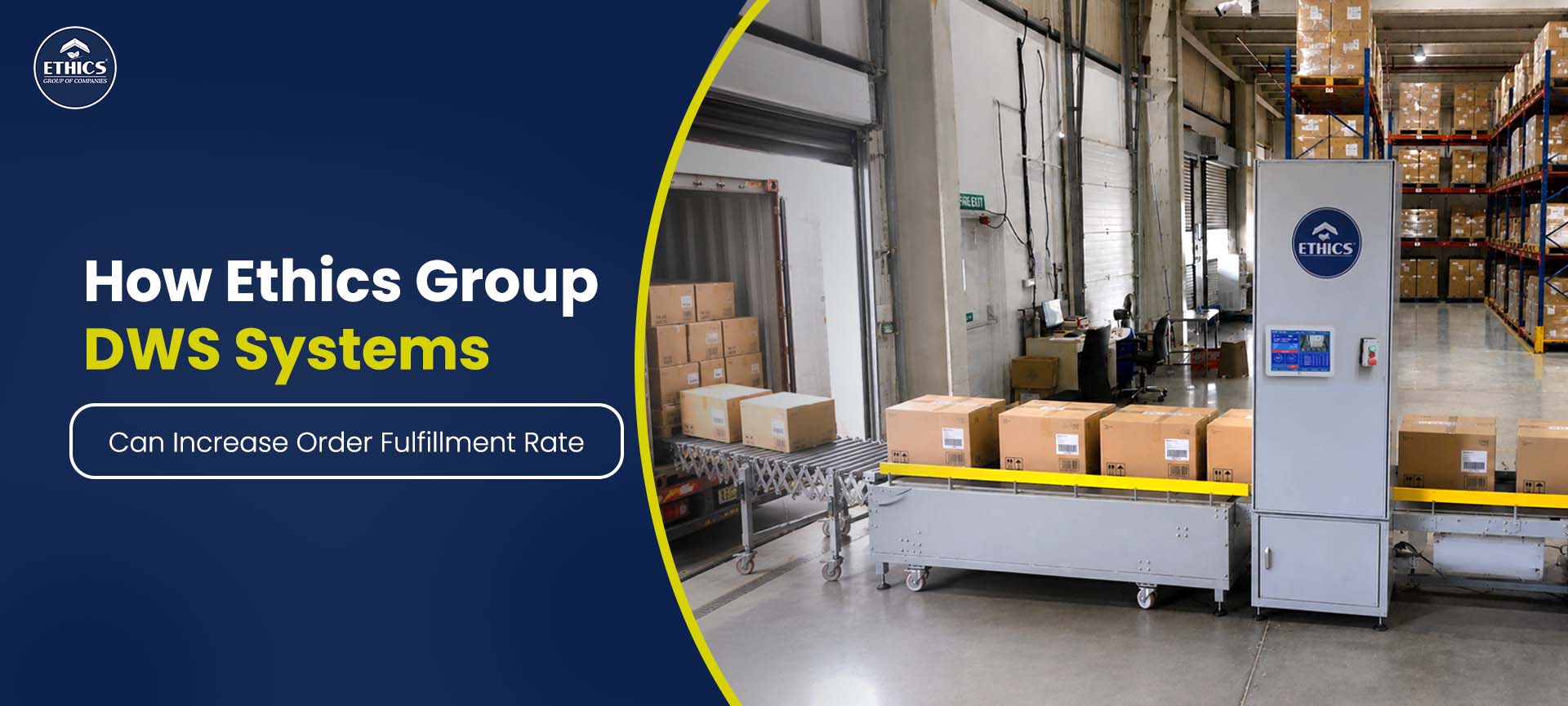
A DWS system is an automated logistics solution that captures package dimensions, weight, and barcode data in real time. Typically integrated with conveyor systems and warehouse software, DWS solutions automate shipment verification and package identification processes.
In traditional warehouse environments, manual dimensioning and weighing create multiple operational inefficiencies:
- Slower shipment processing
- Human errors in package measurements
- Incorrect freight billing
- Delayed dispatch timelines
- Reduced warehouse productivity
DWS automation eliminates these challenges by capturing shipment data instantly as parcels move through fulfillment lines.
For businesses managing high-volume operations, automated shipment processing is becoming essential rather than optional.
Key Industry Challenges Affecting Order Fulfillment Rates
1. Rising Shipment Volumes
E-commerce growth and omnichannel retail operations have dramatically increased order volumes. Warehouses are expected to process thousands of parcels daily while maintaining speed and accuracy.
Manual operations often struggle to keep pace during peak demand periods.
2. Operational Bottlenecks
Traditional package handling processes slow down dispatch operations, particularly when shipment verification depends on manual data entry or physical measurements.
Bottlenecks at sorting and dispatch stations can reduce overall warehouse throughput.
3. Data Inaccuracy in Logistics Operations
Incorrect shipment dimensions or weight data can result in freight disputes, billing discrepancies, and inefficient transport planning.
Inaccurate data also impacts inventory visibility and operational forecasting.
4. Labor Dependency
Labor-intensive fulfillment models create scalability challenges, especially during seasonal demand spikes. Workforce shortages and inconsistent operational performance can negatively impact delivery timelines.
5. Increasing Customer Expectations
Modern customers expect faster deliveries, accurate tracking updates, and reliable shipment handling. Delays or dispatch errors can directly affect customer retention and brand trust.
How DWS Systems Increase Order Fulfillment Rate
Faster Package Processing
One of the biggest operational advantages of DWS systems is processing speed.
Automated dimensioning and scanning significantly reduce the time required to verify packages before dispatch. Instead of manually measuring and recording shipment information, warehouse operators can process parcels automatically while they move through conveyor systems.
This accelerates sorting, packing, and dispatch operations, allowing fulfillment centers to handle higher shipment volumes efficiently.
Faster package processing directly contributes to improved order fulfillment rates.
Improved Shipment Accuracy
Accurate shipment information is essential for smooth logistics execution.
DWS systems eliminate manual data entry errors by automatically capturing package measurements and barcode information with high precision. This reduces discrepancies in shipping labels, freight calculations, and inventory records.
Improved accuracy also minimizes:
- Shipment rejections
- Dispatch delays
- Billing disputes
- Misrouted deliveries
For high-volume logistics operations, accurate shipment verification creates more reliable supply chain performance.
Enhanced Warehouse Productivity
Warehouse efficiency depends heavily on process optimization.
DWS automation reduces repetitive manual tasks, enabling warehouse staff to focus on operational supervision, exception handling, and strategic workflow management instead of routine package verification.
This improves workforce productivity without requiring significant labor expansion.
As warehouses scale operations, automation helps maintain consistent fulfillment performance while controlling operational costs.
Real-Time Operational Visibility
Modern supply chain operations require real-time visibility across fulfillment networks.
DWS systems integrate with warehouse management systems (WMS), enterprise resource planning (ERP) platforms, and transportation management software to provide live shipment data and operational insights.
This enables businesses to:
- Track package movement
- Monitor dispatch performance
- Identify operational bottlenecks
- Improve shipment traceability
- Optimize warehouse workflows
Real-time visibility supports faster operational decision-making and improves fulfillment coordination across distribution centers.
Better Freight Optimization
Accurate dimension and weight data improve transportation planning and freight optimization.
Logistics companies can maximize vehicle utilization, reduce unused cargo space, and improve load planning efficiency using automated shipment measurements.
This helps reduce transportation costs while improving overall delivery efficiency.
For enterprises operating large-scale distribution networks, freight optimization creates measurable cost savings over time.
Role of DWS Systems in Warehouse Automation
Warehouse automation is becoming a critical investment area for businesses aiming to improve supply chain scalability.
DWS systems support broader warehouse automation strategies by integrating with:
- Conveyor automation systems
- Sortation technologies
- Warehouse robotics
- Automated storage systems
- Smart fulfillment platforms
These integrations create faster and more connected warehouse ecosystems capable of supporting growing order volumes.
Automation also helps businesses improve operational consistency across multiple fulfillment centers.
Use Cases Across Industries
E-Commerce Fulfillment Centers
E-commerce operations require high-speed package processing and dispatch accuracy.
DWS systems help online retailers manage fluctuating order volumes while maintaining rapid delivery commitments and minimizing fulfillment errors.
Third-Party Logistics Providers (3PLs)
3PL companies manage diverse shipment categories across multiple client accounts.
Automated shipment verification improves operational efficiency, billing accuracy, and warehouse throughput for logistics service providers.
Retail Distribution Networks
Retail supply chains rely on timely inventory movement between warehouses, stores, and delivery hubs.
DWS automation supports efficient package handling and improves dispatch coordination across retail distribution operations.
Manufacturing and Industrial Logistics
Manufacturers handling large shipment volumes require accurate freight data for production planning and distribution management.
DWS systems improve shipment tracking, packaging accuracy, and transportation planning for industrial supply chains.
Operational Impact of DWS Automation
Businesses implementing DWS systems often experience measurable operational improvements, including:
- Faster dispatch timelines
- Higher warehouse throughput
- Reduced shipment errors
- Improved labor efficiency
- Better freight cost control
- Enhanced customer satisfaction
- Greater operational scalability
These improvements contribute directly to stronger fulfillment performance and long-term logistics optimization.
Future Trends in Fulfillment Automation
As supply chains become increasingly data-driven, fulfillment operations will continue evolving toward intelligent automation.
Future-ready warehouses are expected to integrate DWS technology with:
- Artificial Intelligence (AI)
- Predictive analytics
- IoT-enabled logistics systems
- Robotics automation
- Real-time supply chain monitoring
Businesses adopting advanced automation technologies today will be better positioned to manage future logistics complexity and customer expectations.
Automation is no longer viewed purely as a cost-saving initiative — it is becoming a strategic business enabler.
Conclusion
In an increasingly competitive logistics landscape, operational speed, shipment accuracy, and fulfillment efficiency have become essential business priorities. Manual warehouse processes are no longer sufficient for handling modern shipment volumes and evolving customer expectations.
DWS systems help businesses improve package processing speed, eliminate operational inefficiencies, and strengthen warehouse productivity through intelligent automation. From e-commerce fulfillment centers to industrial distribution facilities, automated dimensioning, weighing, and scanning technologies are transforming modern logistics operations.
Organizations investing in advanced fulfillment automation solutions can achieve higher order fulfillment rates, better operational visibility, and scalable warehouse performance while improving customer experience and reducing long-term logistics costs. Solutions offered by Ethics Group support businesses in building more efficient and future-ready supply chain operations.







.jpg)