The rapid growth of Direct-to-Consumer (D2C) business models has fundamentally transformed how products move across supply chains. Today’s D2C brands are no longer competing only on product quality or pricing—they are competing on delivery experience, order accuracy, fulfillment speed, inventory visibility, and post-purchase customer satisfaction.
As customer expectations continue to rise, fulfillment operations have become a strategic growth driver rather than a backend logistics function. For D2C brands operating across multiple cities, marketplaces, and digital channels, building a scalable fulfillment network is now essential for sustaining growth and maintaining operational efficiency.
However, scaling fulfillment operations is far more complex than simply increasing warehouse capacity. It requires intelligent inventory positioning, technology-driven visibility, optimized transportation planning, and agile operational execution.
This article explores how D2C businesses can build scalable fulfillment networks capable of supporting long-term growth, improving delivery performance, and reducing operational inefficiencies in increasingly competitive markets.
Understanding the Fulfillment Challenges in the D2C Ecosystem
The D2C market has witnessed aggressive expansion over the last few years, especially across sectors such as fashion, electronics, beauty, wellness, food products, and lifestyle goods. While this growth presents major revenue opportunities, it also introduces significant logistics and fulfillment challenges.
Increasing Customer Delivery Expectations
Modern consumers expect faster deliveries, real-time shipment tracking, seamless returns, and consistent service quality. Same-day and next-day delivery expectations are rapidly becoming standard in urban markets.
For D2C brands, failing to meet these expectations can directly impact customer retention and brand loyalty.
Inventory Fragmentation Across Channels
D2C businesses often manage inventory across multiple sales channels, including their own websites, marketplaces, retail stores, and social commerce platforms. Without centralized inventory visibility, businesses face stock imbalances, delayed shipments, and higher fulfillment costs.
Rising Logistics Costs
Transportation expenses, warehouse operating costs, packaging requirements, and return handling costs continue to rise. As order volumes scale, inefficient fulfillment models can quickly reduce profitability.
Demand Volatility
Seasonal spikes, promotional campaigns, influencer-driven demand surges, and flash sales create unpredictable order patterns. Fulfillment networks must be agile enough to handle fluctuating order volumes without operational disruption.
What Defines a Scalable Fulfillment Network?
A scalable fulfillment network is a logistics infrastructure designed to support increasing order volumes, expanding geographic reach, and evolving customer expectations without compromising operational performance.
Scalability in fulfillment operations involves:
- Distributed inventory management
- Flexible warehousing capabilities
- Technology-enabled order orchestration
- Multi-location fulfillment optimization
- Transportation agility
- Real-time operational visibility
- Efficient returns management
The goal is not simply operational expansion—it is sustainable and efficient growth.
Key Components of a Scalable D2C Fulfillment Network
1. Distributed Warehousing Strategy
One centralized warehouse may work during early-stage growth, but as order volumes increase, businesses often face delivery delays and rising transportation costs.
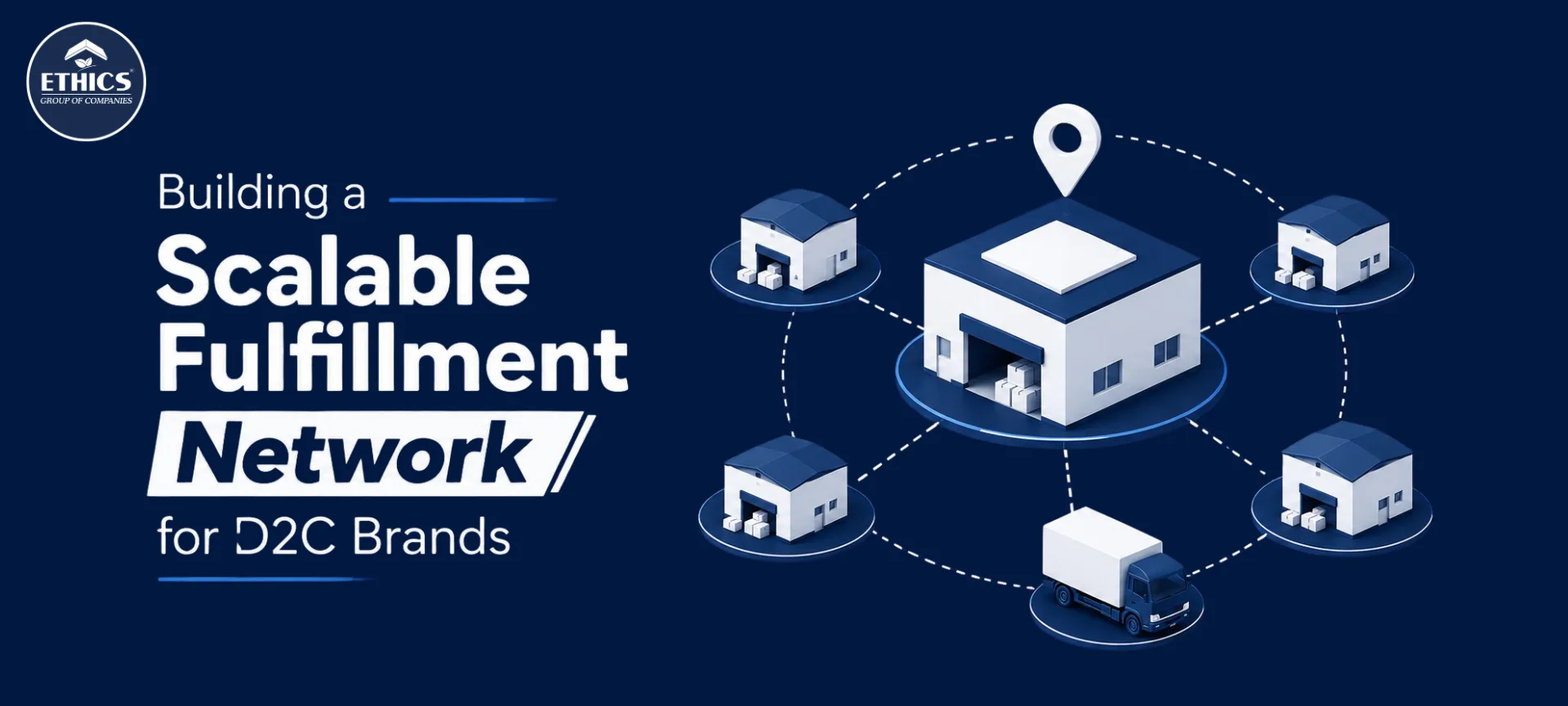
Distributed warehousing allows inventory to be strategically positioned closer to customer demand clusters. This reduces shipping transit times and improves delivery performance.
Regional fulfillment centers also help businesses manage inventory more efficiently during high-demand periods and reduce dependency on a single operational hub.
For D2C brands expanding nationally, distributed fulfillment networks significantly improve service reliability.
2. Intelligent Inventory Visibility
Inventory visibility is one of the most critical pillars of scalable fulfillment operations.
Businesses need centralized visibility across warehouses, fulfillment centers, dark stores, and retail inventory pools to ensure accurate order allocation and stock management.
Advanced warehouse management systems (WMS) enable:
- Real-time inventory tracking
- Automated stock synchronization
- Demand forecasting
- SKU-level visibility
- Replenishment planning
Without accurate inventory visibility, businesses risk overselling, delayed dispatches, and inventory deadstock.
3. Technology-Driven Order Orchestration
As D2C operations scale, manual order processing becomes operationally inefficient.
Order orchestration platforms help businesses intelligently route orders based on:
- Customer location
- Warehouse capacity
- Inventory availability
- Delivery timelines
- Shipping costs
This improves order allocation efficiency while reducing delivery lead times and operational bottlenecks.
Automation also minimizes human dependency and improves fulfillment consistency during high-volume periods.
4. Last-Mile Delivery Optimization
The last mile remains one of the most expensive and operationally sensitive stages in D2C logistics.
Customers directly associate delivery experience with brand quality. Delayed deliveries, damaged shipments, or poor communication negatively impact customer trust.
Scalable fulfillment networks require optimized last-mile strategies such as:
- Multi-carrier shipping models
- Regional courier partnerships
- Hyperlocal delivery integration
- Delivery route optimization
- Automated shipment tracking
Businesses must continuously evaluate delivery performance metrics to maintain service quality as operations scale.
5. Returns and Reverse Logistics Management
Returns are a major operational challenge for D2C brands, particularly in industries such as fashion and consumer electronics.
An inefficient returns process can increase operational costs and negatively impact customer experience.
Scalable fulfillment networks should include structured reverse logistics processes for:
- Return authorization management
- Product inspection workflows
- Inventory reintegration
- Refund processing
- Return transportation optimization
Efficient reverse logistics operations help businesses improve inventory recovery and reduce fulfillment losses.
Operational Benefits of a Scalable Fulfillment Network
Faster Delivery Performance
Strategically positioned inventory and optimized order routing reduce transit times and improve delivery speed.
This directly contributes to higher customer satisfaction and repeat purchases.
Improved Inventory Efficiency
Centralized visibility and automated stock management reduce inventory inaccuracies and minimize stockouts.
Businesses can maintain leaner inventory levels while improving product availability.
Reduced Operational Costs
Scalable fulfillment models reduce unnecessary transportation movements, improve warehouse productivity, and optimize labor utilization.
Over time, operational efficiency significantly improves overall profitability.
Better Customer Experience
Reliable delivery timelines, real-time tracking, accurate order fulfillment, and seamless returns collectively improve customer trust and long-term retention.
For D2C brands, customer experience is often the strongest competitive differentiator.
Business Expansion Readiness
Scalable logistics infrastructure enables businesses to expand into new regions and markets without major operational disruptions.
This flexibility becomes essential for rapidly growing D2C brands.
Real-World Fulfillment Scenarios in D2C Operations
Scenario 1: Seasonal Sales Scalability
During festive sales or promotional campaigns, order volumes can increase dramatically within short periods.
Businesses with scalable fulfillment networks can quickly allocate inventory across multiple facilities, optimize dispatch operations, and maintain delivery commitments during peak demand periods.
Scenario 2: Multi-City Expansion
A growing D2C brand expanding into Tier-2 and Tier-3 cities requires regionally optimized fulfillment operations.
Distributed fulfillment centers reduce shipping lead times while improving service coverage across emerging markets.
Scenario 3: Omnichannel Inventory Utilization
Many D2C brands now operate through online marketplaces, physical retail stores, and brand-owned websites simultaneously.
Integrated fulfillment systems help businesses manage inventory efficiently across all sales channels while preventing stock duplication and operational conflicts.
Emerging Trends Shaping D2C Fulfillment Networks
AI-Driven Demand Forecasting
Artificial intelligence is helping businesses predict demand fluctuations more accurately, enabling smarter inventory planning and warehouse allocation strategies.
Micro-Fulfillment Centers
Urban micro-fulfillment hubs are becoming increasingly important for enabling same-day and rapid delivery capabilities in densely populated regions.
Automation and Robotics
Automated sorting systems, robotic picking technologies, and conveyor-based fulfillment operations are improving warehouse throughput and operational accuracy.
Sustainability in Fulfillment Operations
Businesses are increasingly adopting sustainable packaging, route optimization, and energy-efficient warehousing practices to reduce environmental impact.
Sustainability is becoming both an operational and brand positioning priority.
Strategic Considerations Before Scaling Fulfillment Operations
Before expanding fulfillment infrastructure, businesses should evaluate:
- Demand patterns by region
- SKU movement trends
- Warehouse operating costs
- Delivery performance metrics
- Return percentages
- Technology integration readiness
- Carrier network reliability
Scaling without operational planning can create inefficiencies that impact profitability and customer experience.
A structured, data-driven approach is essential for long-term fulfillment scalability.
Conclusion
Building a scalable fulfillment network is no longer optional for growing D2C brands. As customer expectations evolve and delivery competition intensifies, businesses must create agile, technology-enabled logistics ecosystems capable of supporting sustainable growth.
A scalable fulfillment strategy improves delivery speed, inventory accuracy, operational efficiency, and customer satisfaction while enabling businesses to expand confidently into new markets.
Organizations that invest in fulfillment scalability today will be better positioned to adapt to changing consumer behaviors and future supply chain demands. Companies such as Ethics Group continue to support evolving logistics operations through integrated supply chain and fulfillment solutions designed for modern business environments.